
Researchers at the California Institute of Technology believe a usable quantum computer may arrive before 2030. Their new study suggests that just 10,000 to 20,000 qubits could be sufficient - far fewer than earlier estimates.
A key innovation lies in neutral-atom systems, where atoms are manipulated using lasers known as optical tweezers. These allow qubits to connect over long distances, improving efficiency and reducing error rates.
“This progress makes me optimistic that broadly useful quantum computing will soon be a reality,” said theoretical physicist John Preskill.
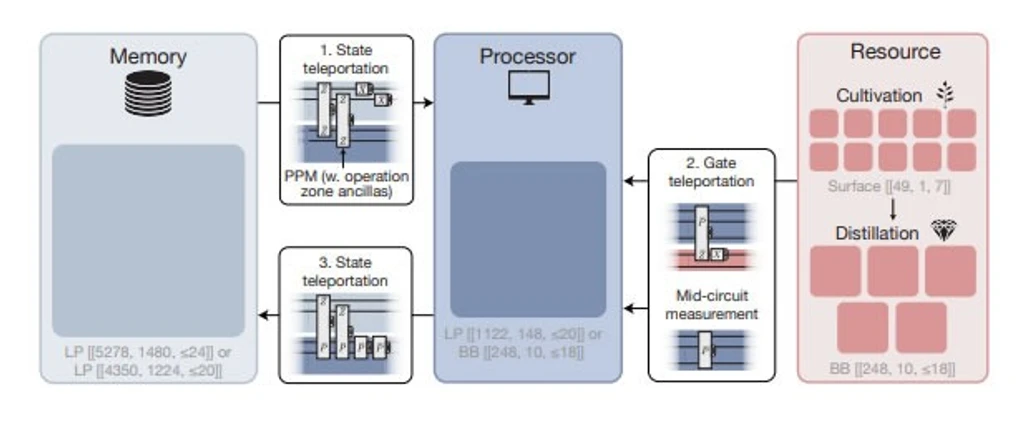
Professor Manuel Endres added that each logical qubit can now be encoded with only five physical qubits, compared to thousands under older models. He described the breakthrough as “ultra-efficient error correction.”
Caltech is partnering with startup Oratomic to advance development toward a utility-scale fault-tolerant machine. Meanwhile, Google has warned that quantum threats to cryptocurrency may emerge sooner than expected, urging developers to adopt post-quantum cryptography immediately.