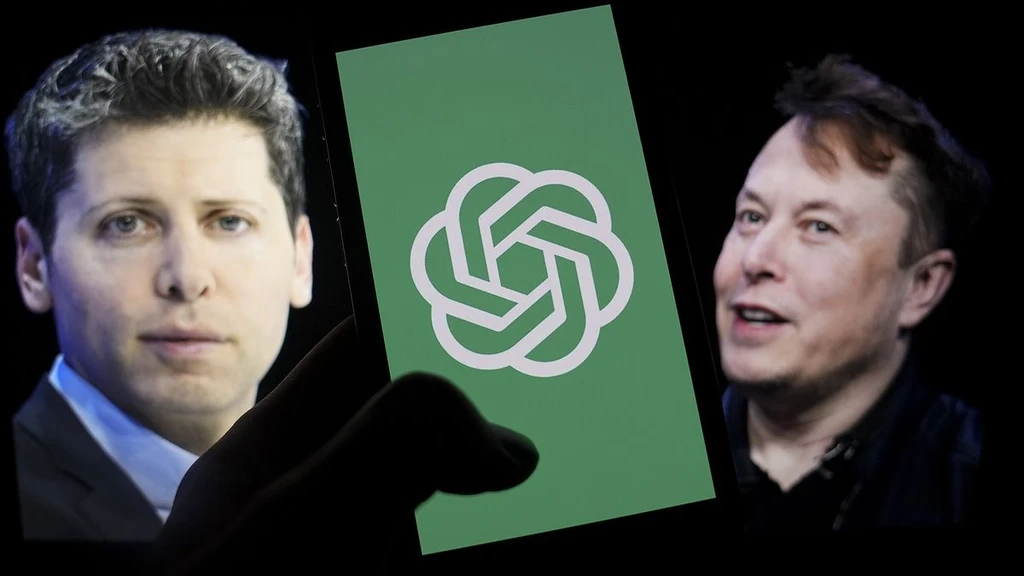
A bitter legal battle between two tech billionaires, Elon Musk and Sam Altman, is unfolding in a U.S. court, with the potential to reshape not just OpenAI, the company behind ChatGPT, but the entire future of artificial intelligence.
Musk, who co-founded OpenAI in 2015 and initially funded it with $44 million, launched the lawsuit in 2024. The core of the dispute is OpenAI's transformation from a non-profit to a for-profit enterprise, which Musk alleges was a breach of the founding agreement that the technology would remain "open."
Musk's lawsuit targets Altman, OpenAI President Greg Brockman, the company itself, and its primary backer, Microsoft. Musk claims he was induced to donate on the promise that any artificial general intelligence (AGI) developed would benefit humanity, not become what he calls a "wealth machine."
(Image credit: Nikolas Kokovlis/NurPhoto via Getty Images)
OpenAI denies the allegations, stating Musk left the board when he was denied majority control and that the lawsuit is motivated by jealousy and a desire to damage a competitor.
The trial arrives as OpenAI faces significant financial pressure, with internal projections showing $14 billion in losses for 2026. The company recently shut down its Sora video model, costing a Disney partnership, and is undergoing a $122 billion fundraise from Amazon, Nvidia, and SoftBank.
Musk is seeking $130 billion in damages, the removal of Altman and Brockman from their roles, and a reversal of OpenAI's for-profit status. A Musk victory could derail OpenAI's planned $1 trillion IPO and set a precedent for other mission-driven AI labs.
Even if Musk loses, the trial has exposed Silicon Valley's boardroom secrets, crystallizing a public anxiety that a powerful technology is being controlled by a few feuding tech billionaires.