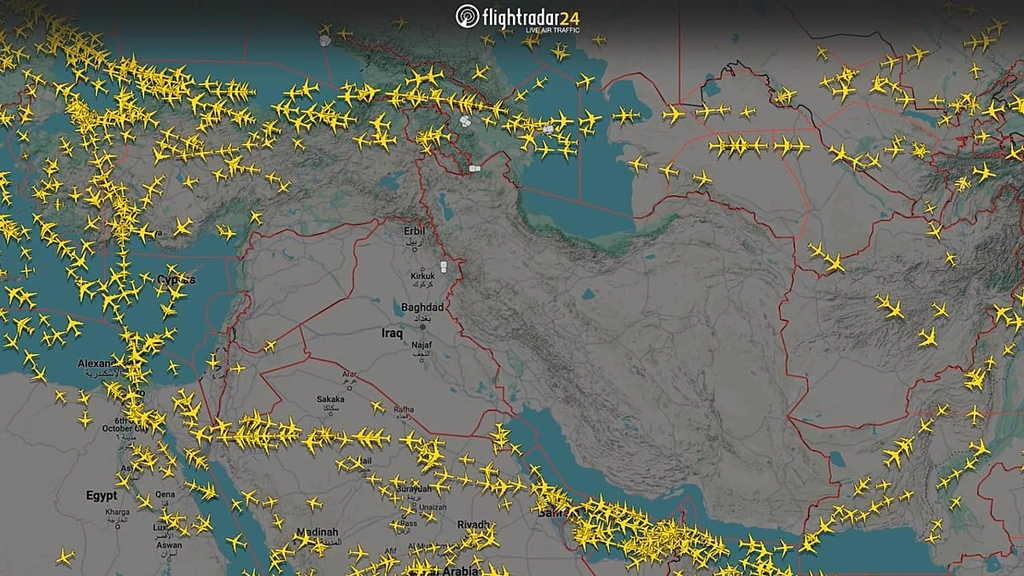
When global tensions rise, millions turn to Flightradar24 to watch flights in real time. The platform aggregates data from a global network of around 58,000 ground-based receivers-many hosted by volunteers-and satellite feeds to track aircraft altitude, speed, route, and type.
During the February 2026 U.S.-Israel strikes on Iran, site traffic surged to 20 million visits in one day-four times its normal volume-as airlines rerouted flights across the Middle East. The narrow corridor over Turkey, Georgia, Azerbaijan, and Armenia has become critical for Europe-Asia routes after Iranian and Iraqi airspace closures.
Co-founders Mikael Robertsson and Olov Lindberg launched the service out of curiosity in Sweden. What began as a side project now powers situational awareness for pilots, journalists, and the public. It played key roles in the MH370 search and the Germanwings crash investigation.
Despite its reach, the system faces challenges: signal jamming in conflict zones can cause erratic tracking, and remote areas still have coverage gaps. To address this, receivers are deployed in extreme locations like Antarctica.
The platform maintains a database of 1.2 million aircraft, including manufacturer, age, and serial numbers.