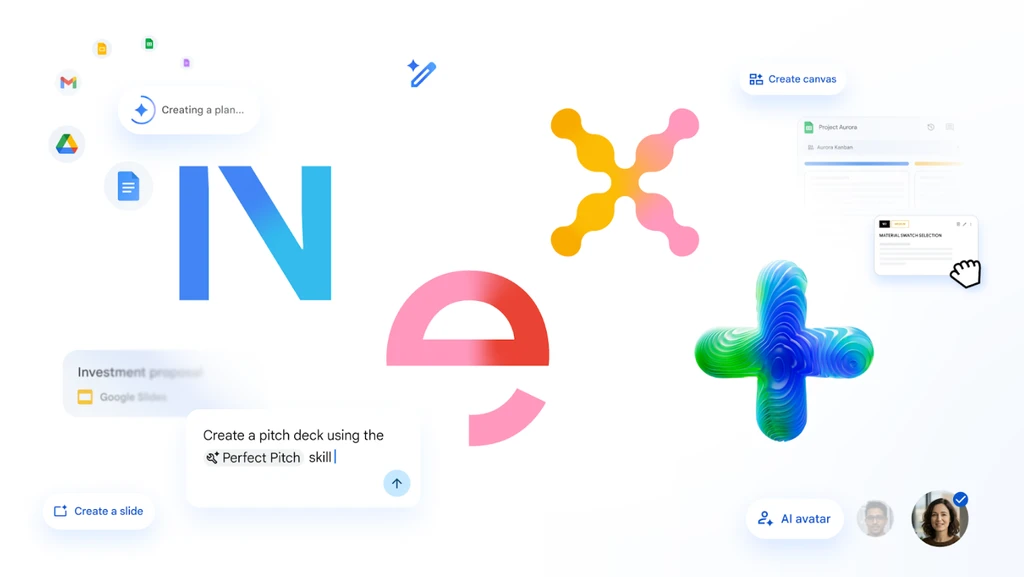
Google is injecting significant AI capabilities into its Workspace productivity suite with a new system called Workspace Intelligence. This advanced system transforms standard applications into autonomous and collaborative AI agents designed to help users accomplish tasks faster.
According to Google Workspace Vice President of Product Yulie Kwon Kim, the focus is shifting from passive AI assistants to "agentic work." This means AI will understand project context and organizational knowledge to initiate work autonomously, addressing the fragmentation of modern work where employees spend excessive time gathering scattered information across multiple platforms.
Workspace Intelligence maps semantic relationships within Docs, Slides, and Gmail to understand user goals and reduce context switching. A unified command line in Google Chat, powered by Gemini, acts as a central hub. Users can simply request actions like scheduling meetings or retrieving files, with Gemini handling the execution.
Gemini in Docs and Slides will now draft content, generate presentations, and format them according to company branding and templates by pulling relevant data from emails, chats, and web sources. AI Overviews are also extending to Gmail and Drive, allowing users to get direct answers to questions, with new Drive Projects tools centralizing file and email context.
Further enhancements include a "Sheets canvas" for creating interactive mini-applications and dashboards, and new "Skills" for building automated workflows. Google Vids is introducing customizable "digital avatars" supporting 24 languages for global video messaging. The "Take Notes for Me" feature in Google Meet will now capture summaries and action items from third-party platforms when accessed via a Google device.
To address security concerns with increasingly autonomous AI agents, Google is introducing AI Control Centers and agent management tools. Administrators can monitor and audit agent interactions with sensitive data. Additionally, Google is expanding sovereign controls, allowing customers to lock their data within specific regions like the U.S. or EU.