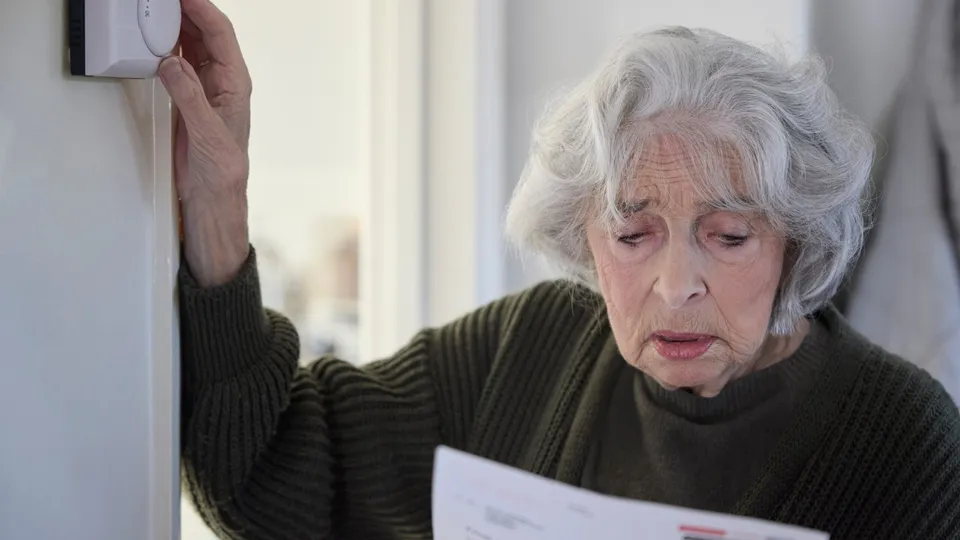
Many common strategies for cooling your home are actually costly mistakes. These practices don't save money and can even increase energy consumption and wear down your HVAC system.
Myth 1: Cranking the thermostat cools your home faster.
Truth: Most central AC systems operate at a single speed - on or off. Setting a low temperature doesn't make the unit work harder; it simply runs continuously until it reaches an unrealistic target, wasting electricity.
Fix: Set your thermostat to your actual desired temperature. For most homes, "supercooling" is an energy drain.
Myth 2: Ceiling fans cool rooms.
Truth: Fans cool people, not rooms, through the wind-chill effect. A fan in an empty room does not lower the air temperature and can even slightly warm it due to motor heat.
Fix: Turn off fans when you leave a room. Proper fan use allows you to raise your thermostat setting by about 4 degrees without sacrificing comfort.
Myth 3: Closing vents in unused rooms saves money.
Truth: Closing vents disrupts your HVAC system's balanced loop, increasing pressure. This can lead to air leaks, ductwork inefficiencies, and potential damage to the blower motor or system coils.
Fix: Keep supply vents open for proper airflow and system longevity. For zoning, consider professional systems.
Myth 4: It costs more to turn the AC back on than to leave it running.
Truth: Letting your home heat up when you're away slows heat transfer from outside. Keeping it cool all day against high outdoor temperatures forces the AC to work harder.
Fix: Use a programmable or smart thermostat to let the temperature rise while away and begin cooling before you return. Adjusting the thermostat by 7-10 degrees for eight hours can save up to 10% annually.
Myth 5: A bigger air conditioner performs better.
Truth: An oversized AC cools too quickly and shuts off before adequately removing humidity, leaving your home feeling cold but clammy. This "short cycling" also stresses the system's components.
Fix: Ensure your unit is properly sized using a load calculation. A correctly sized unit runs longer cycles, maintaining consistent temperatures and low humidity.