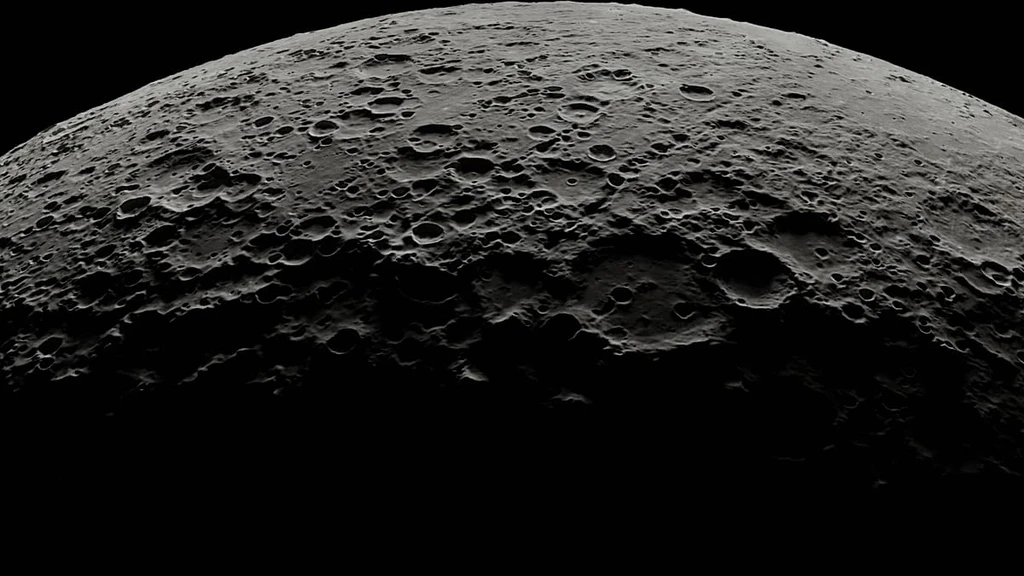
Scientists propose placing ultra-stable lasers in the Moon's permanently shadowed craters to enable GPS-like navigation for future spacecraft, according to a new study published in PNAS.
Researchers from NASA's Jet Propulsion Laboratory and the National Institute of Standards and Technology suggest deploying a small silicon device called an optical cavity into these dark craters. The device stabilizes laser light by controlling reflection between two mirrors.
The extreme cold inside the craters prevents the silicon from expanding or contracting, keeping the mirrors at a constant distance and the laser signal far steadier than on Earth.
This stabilized laser could serve as a timing and navigation beacon, helping spacecraft land safely, communicate between satellites, and support a lunar GPS system.
Researchers also believe a network of such lasers could detect tiny distance changes on the Moon, opening new ways to study gravity and space-time.
The technology may first be tested in low Earth orbit before deployment on the lunar surface within the next few years.