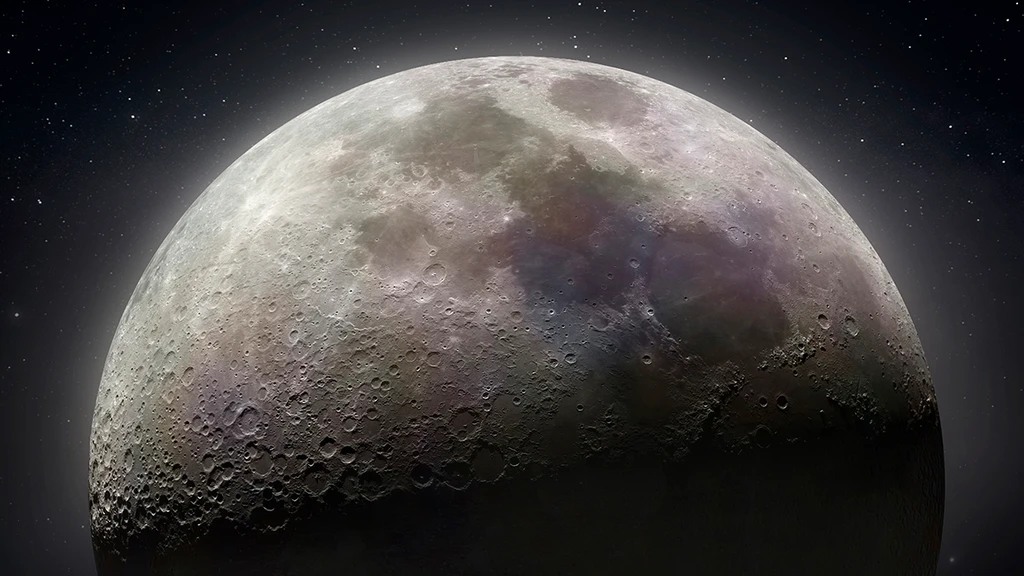
A new study from the University of Oxford resolves a decades-old puzzle: why Apollo mission moon rocks show signs of intense magnetism despite the Moon’s small size and lack of a sustained core dynamo like Earth’s.
Researchers found that these magnetic signatures stem not from a long-lived lunar magnetic field, but from rare, short-lived bursts-lasting only a few thousand years-triggered by geological processes deep within the Moon.
The team analyzed Mare basalts, the dark volcanic rocks sampled by Apollo astronauts, and discovered a clear correlation: stronger magnetism aligned with higher titanium content. Computer models showed that melting of titanium-rich material near the Moon’s core-mantle boundary could briefly boost heat flow from the core, temporarily revving up a magnetic dynamo while also producing titanium-rich lava flows.
Because Apollo missions landed predominantly in titanium-rich Mare regions, the samples were skewed-creating a “sampling bias” that misled scientists for over 50 years into thinking the Moon had a strong, stable magnetic field for half a billion years.
“If we were aliens exploring Earth and landed just six times on flat terrain, we’d likely draw similarly biased conclusions,” said earth scientist Jon Wade.
Today, the Moon has only a weak, patchy magnetic field. The new hypothesis fits existing data but relies on assumptions due to limited lunar samples. Future Artemis missions aim to test this theory by collecting more diverse rock types.