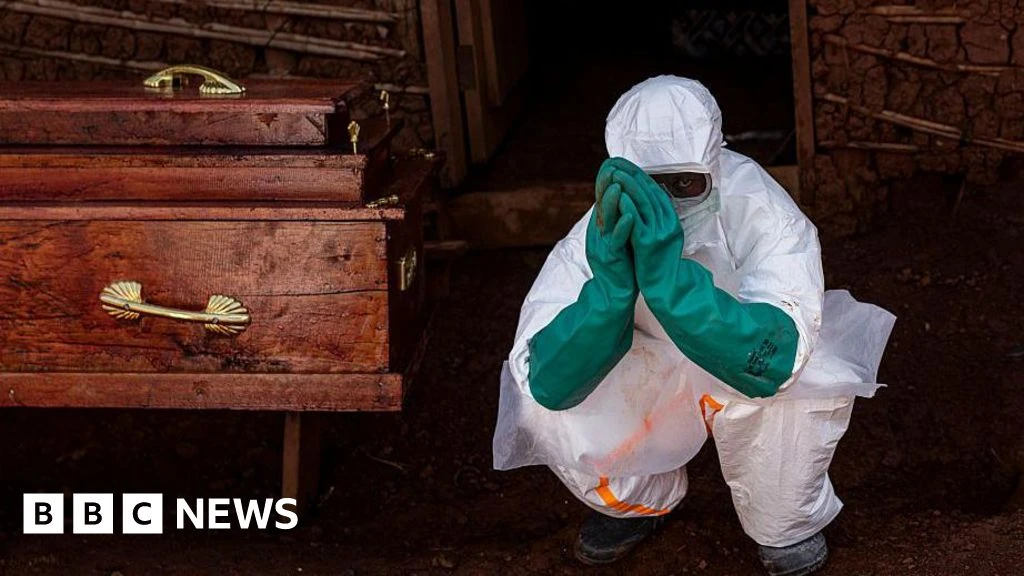
Three experimental vaccines are racing against a fast-moving Ebola outbreak that has already killed nearly 250 people. The culprit is the rare Bundibugyo species, for which no approved vaccine exists.
The International Aids Vaccine Initiative (IAVI) said the outbreak is threatening to become the worst on record. The University of Oxford and pharmaceutical giant Moderna are also developing candidates against Bundibugyo.
The Coalition for Epidemic Preparedness Innovations (CEPI) is funding the early-stage research. CEO Dr. Richard Hatchett said: "Every day counts in the race against this deadly disease."
More than 1,000 suspected cases have been reported in the Democratic Republic of Congo, with nine confirmed cases in neighboring Uganda. Health officials fear this could rival the 2014-16 West Africa outbreak, which infected nearly 29,000 people and killed more than 11,000.
Médecins Sans Frontières (MSF) called the situation "deeply alarming," noting that never before have so many cases been recorded so quickly.
Each vaccine uses a different technology. IAVI is using a modified version of the Zaire Ebola vaccine, which has shown close to 100% protection in monkey trials. Moderna is deploying its mRNA platform. Oxford is using its proven vaccine technology. All are designed to train the immune system to recognize the Bundibugyo glycoprotein.
IAVI estimates it will take seven to nine months to be ready for clinical trials. Oxford says it could begin human trials in two to three months. Moderna has not yet specified a timeline.
Dr. Tedros Adhanom Ghebreyesus, director general of the World Health Organization, said: "A Bundibugyo vaccine could help to control this epidemic and strengthen preparedness for future outbreaks."