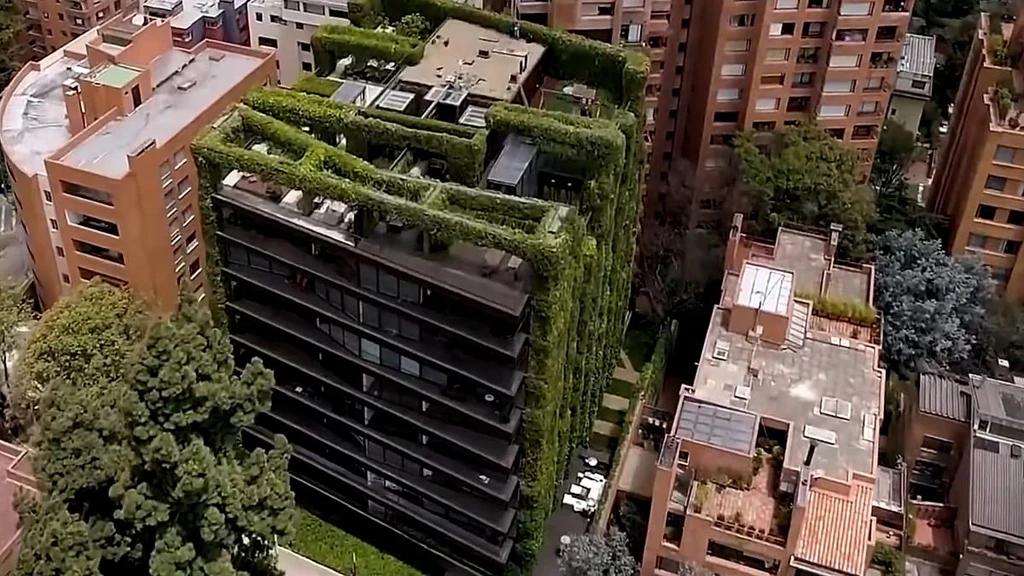
Vertical gardens, pioneered in Europe by French botanist Patrick Blanc in the 1980s, are being scaled up across Latin America. Spanish botanist Ignacio Solano notes that while major European capitals have one to three significant vertical gardens, Buenos Aires, Mexico City, and Guatemala City each have hundreds.
Milan's Bosco Verticale, a pair of residential skyscrapers with over 21,000 trees and shrubs, absorbs nearly 20,000 kilograms of carbon annually and supports 20 bird species.
As European capitals brace for heatwaves, research shows vertical gardens can significantly lower building surface temperatures, reduce heat absorption, and improve thermal comfort in dense areas. Green walls also filter particulate matter, absorb carbon dioxide, and provide habitat for birds and insects.
Solano's company, Paisajismo Urbano, has installed nearly a million square meters of vertical gardens globally. His modern hydroponic systems consume virtually no water and require only one maintenance visit per year.
Through his franchise By Botanik in Guatemala City, Solano teaches a practical five-day course on building vertical gardens, open to anyone enthusiastic, not just professionals. About 85% of participants go on to develop real projects.