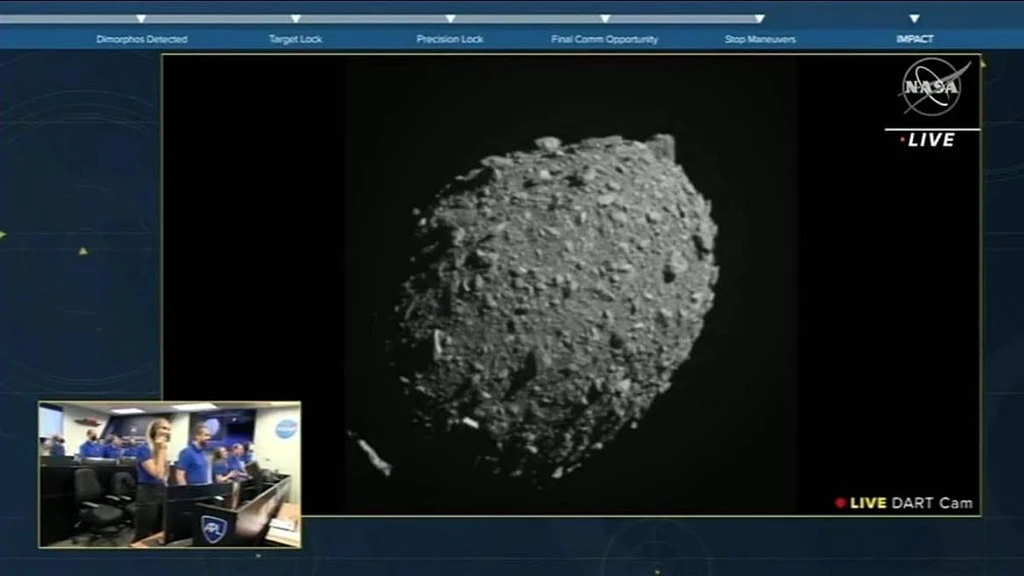
NASA has honored two scientists from Uzbekistan for their critical role in confirming humanity's first successful asteroid deflection. Measurements from the Maydanak Observatory, operated by Kamoliddin Ergashov and Otabek Burkhonov of the Mirzo Ulug‘bek Astronomical Institute, helped verify that the trajectory of the asteroid Dimorphos was altered following NASA's DART spacecraft impact.
Ergashov and Burkhonov were among nearly 100 researchers globally who monitored the planetary defense experiment. Their observations contributed to the international dataset confirming the orbital shift of Dimorphos, a moonlet of the larger asteroid Didymos. The DART mission's kinetic impact successfully shortened Dimorphos' orbit by approximately 32 minutes, a change large enough to be confirmed by multiple observatories and validating the kinetic-impact deflection method. This marks the first experimentally verified change in a natural celestial body's motion directly caused by human action.
The scientists received a NASA Group Achievement Award for their contribution. This recognition underscores Uzbekistan's growing integration into international astronomical research networks and highlights the importance of global observatory collaboration in space safety initiatives, including monitoring near-Earth objects and orbital debris.