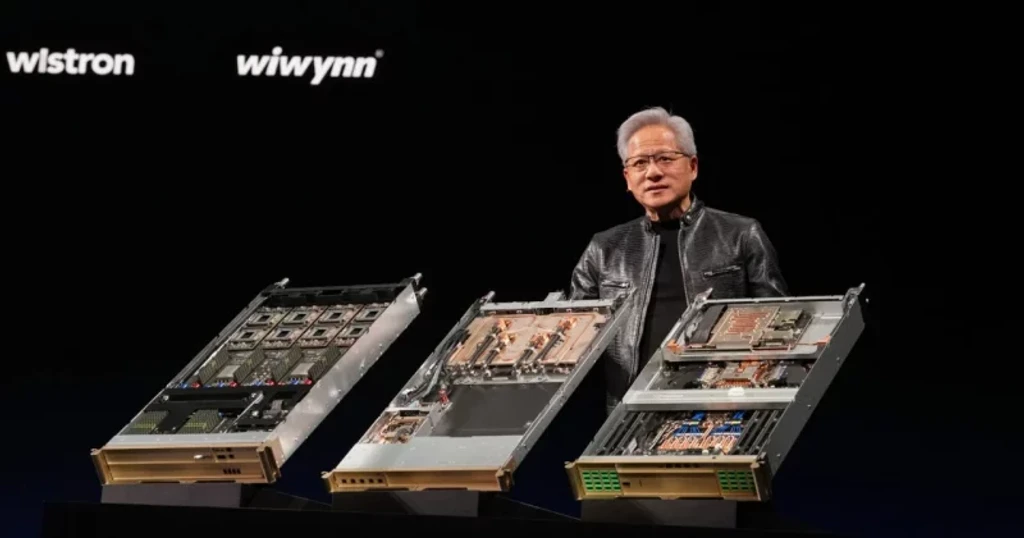
Five years ago, Nvidia was spending between $10 billion and $15 billion annually in Taiwan. Now, that figure is roughly $150 billion. Jensen Huang dropped that data point at Computex 2026, underscoring Taiwan's growing importance to the global economy.
The Nvidia CEO called Taiwan the "epicenter of the AI revolution," a statement that gains weight considering TSMC produces approximately 90% of the world's most advanced semiconductor nodes used for AI accelerators. That's not just market share; it's a near-monopoly on the silicon powering every major AI model and data center expansion.
Nvidia's $150 billion annual investment flows overwhelmingly through TSMC, which manufactures its cutting-edge AI GPUs using advanced packaging technologies like Chip-on-Wafer-on-Substrate (CoWoS). This tech is critical for stacking chiplets together to boost AI performance.
AMD has also announced a commitment of over $10 billion to support Taiwan's AI sector. When the two largest GPU companies are racing to deepen manufacturing ties to a single island, it highlights where the leverage sits in the global chip supply chain.
The "silicon shield" concept holds that Taiwan's dominance in advanced semiconductor manufacturing makes it so economically essential that military aggression becomes prohibitively costly. However, this also creates a single point of failure for the entire AI hardware stack. While governments in Washington, Brussels, and Tokyo push for domestic chip manufacturing, the sheer scale of investment flowing into Taiwan suggests the island's centrality is not going away soon.
For investors, the implication is TSMC's pricing power. With its two largest customers collectively spending north of $160 billion annually in its home market, TSMC is in a strong negotiating position. TSMC has already demonstrated willingness to raise prices for advanced nodes.
For Nvidia, the massive spend secures supply for AI GPUs driving its revenue growth, but it also deepens dependence on a single manufacturing partner in a geopolitically sensitive region. AMD's parallel commitment suggests competitive pressure in AI chips is intensifying.