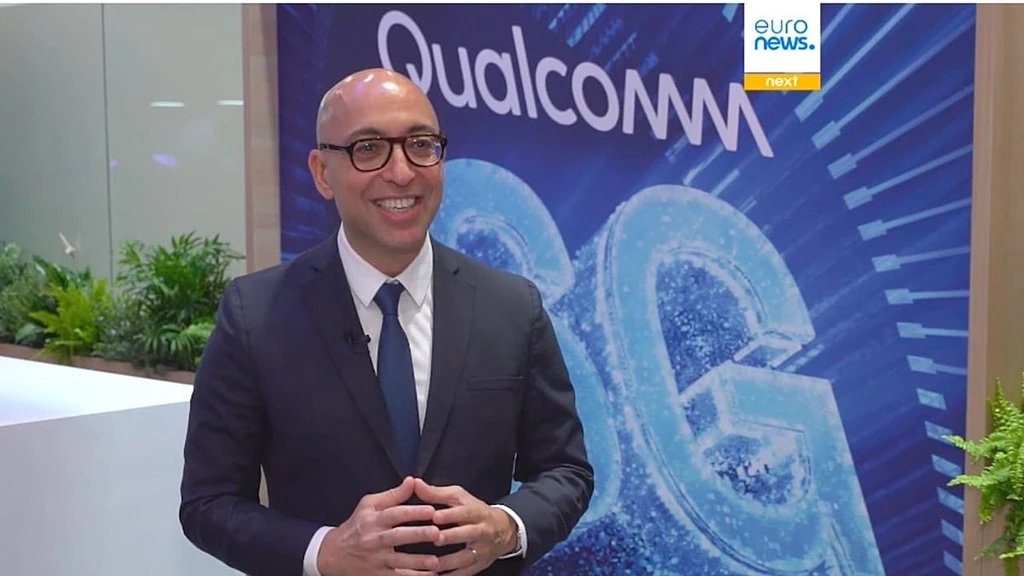
Semiconductor leader Qualcomm has set an ambitious 2029 target for 6G commercialization, labeling the next generation of wireless technology a "revolution, not an evolution." The company advocates for Europe to take the lead in this transformative shift.
Qualcomm aims for pre-commercial 6G deployments by 2028, seeing it as crucial for the advancement of artificial intelligence, connectivity, and high-performance computing. Wassim Chourbaji, Qualcomm's president for the Middle East and Africa, emphasized that 6G will enable "physical AI," a new wave of AI interacting directly with the physical world through applications like robotics and advanced smart glasses.
He highlighted 6G's capacity for massive upload speeds, essential for processing complex data streams required by these physical AI applications. Furthermore, 6G will introduce sensing capabilities for object detection and tracking, which Chourbaji noted is vital for national security.
At the Mobile World Congress, Qualcomm announced a new coalition to accelerate 6G development, including European partners Nokia and Ericsson, alongside US tech giants like Amazon, Google, and Microsoft. Chourbaji also proposed a "hybrid AI" model for Europe's AI sovereignty, distributing computing across devices, edge networks, and the cloud.
Qualcomm's extensive European operations, including R&D and engineering across multiple countries, position it as a key partner for Europe's digital transformation in sectors such as automotive, industrial, and defense. Chourbaji believes Europe's strong manufacturing heritage, coupled with 6G and AI, can establish it as a global leader.