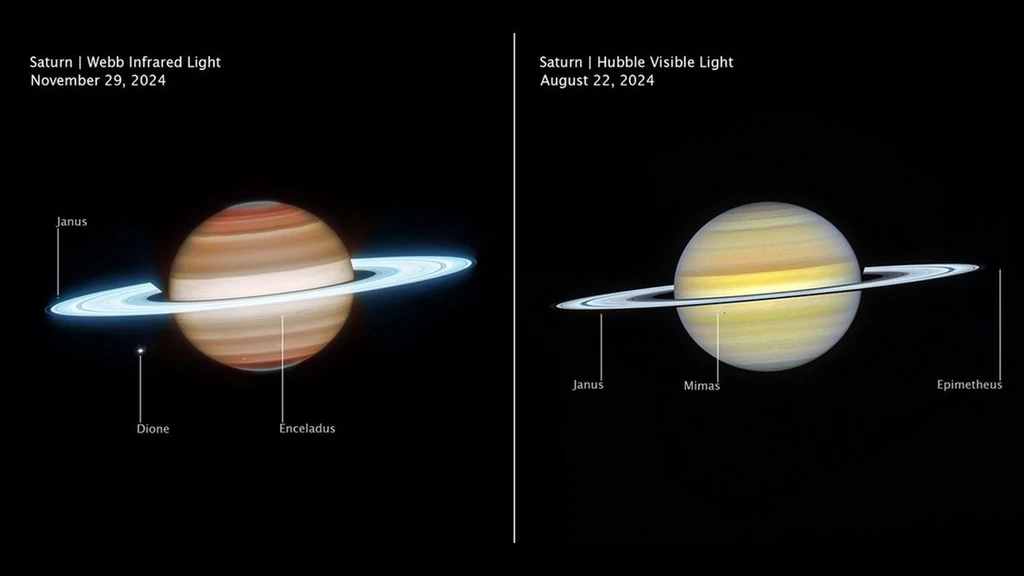
Two images from NASA's James Webb and Hubble Space Telescopes reveal unprecedented details of Saturn's dynamic atmosphere. The telescopes captured Saturn in different wavelengths: Hubble in visible light and JWST in infrared. These images provide researchers with a 'most comprehensive view to date,' allowing them to study atmospheric phenomena like fierce winds, megastorms, and long-lasting weather patterns.
In August 2024, Hubble photographed Saturn as part of its Outer Planet Atmospheres Legacy program. A few months later, in November 2024, JWST took an infrared image. The 14-week gap between observations showed Saturn transitioning from northern summer toward its 2025 equinox.
Hubble's visible-light image revealed Saturn's pale-yellow bands and brilliant-white rings, while JWST's infrared image highlighted glowing blue rings due to highly reflective water ice. Saturn's poles emitted strange gray-green light, possibly from high-altitude aerosols or auroras. As Saturn tilts into southern springtime, both telescopes will continue monitoring its atmosphere for further discoveries.