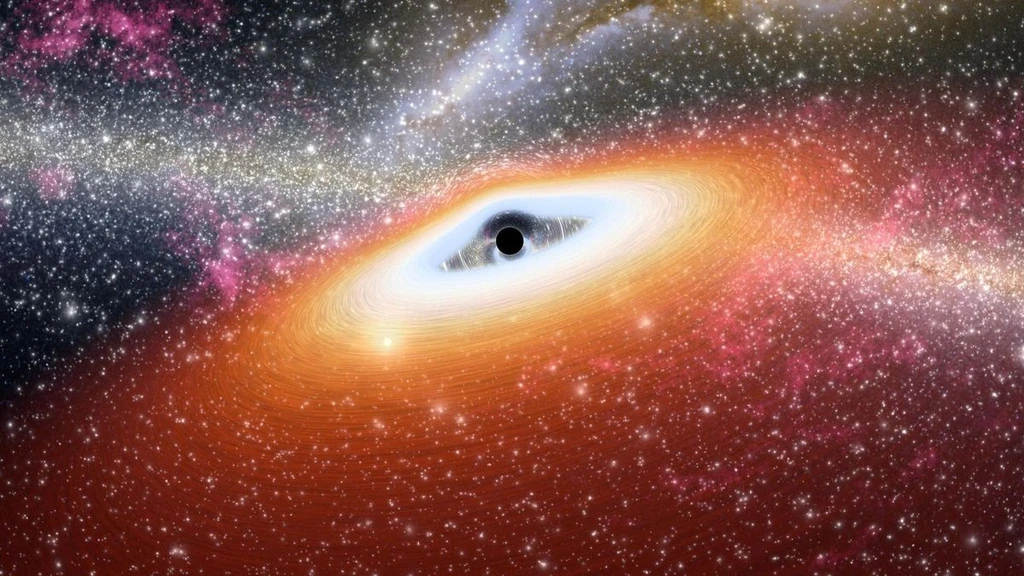
On March 1, 1974, a then 32-year-old Stephen Hawking published a concise paper that fundamentally altered our understanding of black holes. Traditionally viewed as cosmic vacuum cleaners from which nothing could escape, Hawking's work introduced the concept of black hole radiation.
Building on Einstein's theory of relativity and principles of quantum mechanics, Hawking theorized that black holes emit minuscule amounts of heat. This phenomenon, known as Hawking radiation, occurs as virtual particle pairs near the event horizon, where one particle escapes while the other falls in, carrying energy away. Over vast timescales, this radiation would cause black holes to evaporate, potentially leading to an explosion for smaller, primordial black holes formed in the early universe.
This discovery, however, introduced the black hole information paradox: if black holes evaporate, what happens to the information they consume? This paradox occupied Hawking for decades. He later posited that information could escape, suggesting black holes are not entirely prisons. Posthumous research by collaborators and recent theoretical proposals suggest information might be regurgitated or detectable in gravitational wave ripples.
While direct evidence of black hole explosions or primordial black holes remains elusive, observations from instruments like the James Webb Space Telescope continue to explore phenomena potentially linked to these early cosmic structures.