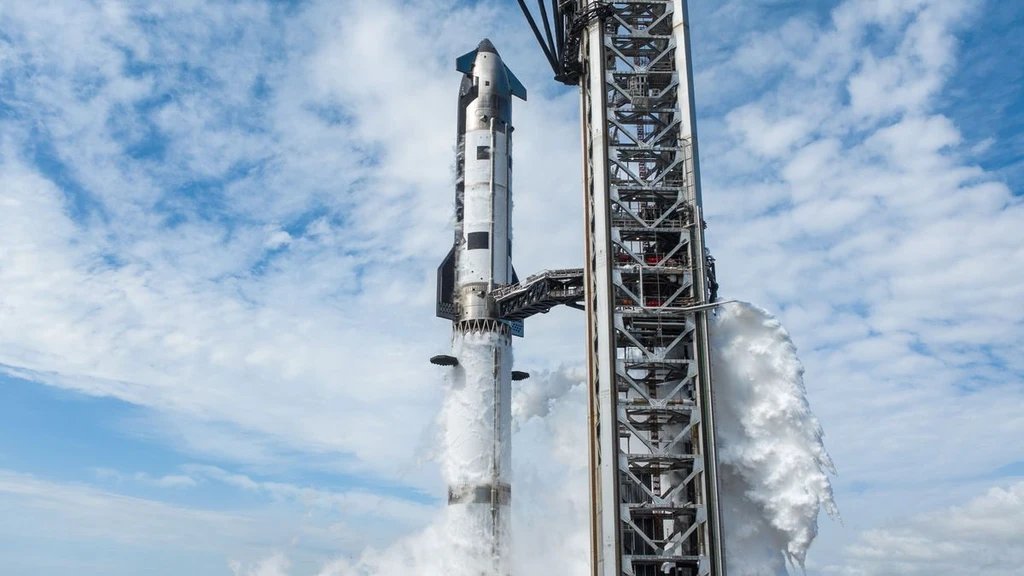
SpaceX is set to launch its next-generation Starship-the tallest and most powerful rocket ever built-as early as Tuesday. The Starship V3's maiden voyage represents a critical test for the company, which aims to land humans on the moon for NASA in 2028 and seeks to avoid the spectacular explosions that have plagued previous tests.
After a series of setbacks, including fiery debris from flight seven and eight, the ninth falling short, and a launchpad explosion before the tenth, Starship achieved a successful tenth flight in August and a clean eleventh run in October.
The latest vehicle, standing 407 feet (124 meters) tall, is equipped with new Raptor 3 engines and will lift off from a redesigned launchpad. If all goes according to plan, the flight will last just over an hour on a suborbital trajectory. The spacecraft will separate from the Super Heavy booster, which will attempt a water landing in the Gulf of Mexico. SpaceX will not attempt its trademark landing site catch, citing the significant redesign.
The Starship will deploy 22 Starlink simulator satellites, similar to the next generation of Starlink. Notably, one heat shield tile has been intentionally removed to measure aerodynamic loads on adjacent tiles. The spacecraft will also practice relighting a Raptor engine in space before a controlled splashdown.
This test is pivotal for NASA's Artemis program, which relies on a commercial lunar lander-either SpaceX's moon-landing variant or Blue Origin's Blue Moon-to ferry astronauts to the lunar surface by 2028. The Artemis program, however, remains behind schedule and over budget.