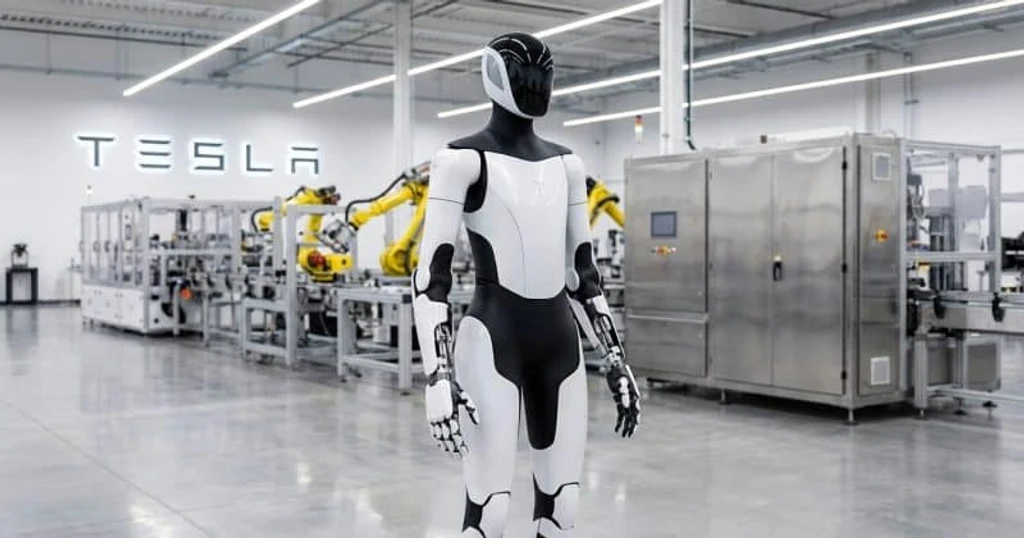
Tesla has officially entered the robot-building business. The company has begun installing its first Optimus humanoid robot production line at its Fremont, California factory. This facility, previously dedicated to assembling Model S and Model X vehicles, is now being converted for industrial-scale robotics manufacturing.
The first-generation line has a target capacity of one million Optimus units per year. Low-volume production is expected to begin in late July or August 2026, following the wind-down of the high-end vehicle assembly. The line incorporates over 10,000 unique parts, indicating a complex initial ramp-up.
Tesla is not starting from zero. More than 1,000 units of the Optimus Gen 3 robot are already deployed internally across its own facilities. These units are used for testing and gathering performance data.
A second-generation production line is planned for Gigafactory Texas, with a vastly larger target capacity of ten million units per year.
For investors, this represents a strategic shift. Tesla is converting proven vehicle production capacity into a new, speculative product category. The company is asking the market to believe it can achieve an unprecedented scale in humanoid robotics, a field also being pursued by competitors like Figure AI, Agility Robotics, and Boston Dynamics.
The initial production milestone in mid-2026 will be a key test for the credibility of Tesla's ambitious long-term targets.