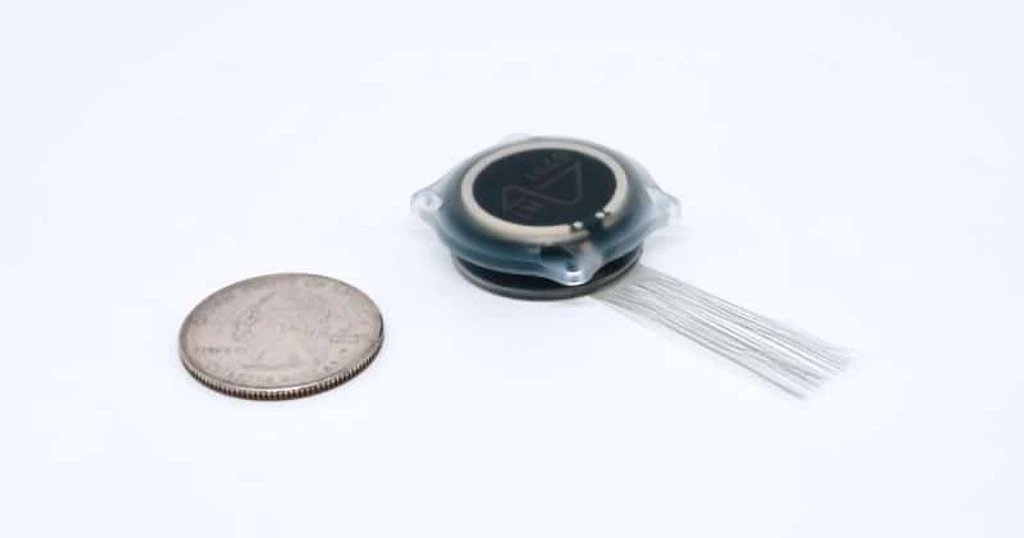
Neuralink has achieved a significant neurosurgical milestone. The company successfully implanted its ultra-thin electrode threads directly through the dura mater, the brain's tough protective membrane, without performing a traditional durectomy.
The dura mater acts as a dense shield for the brain. Conventional implantation requires surgically cutting this membrane, a procedure that increases infection risk and recovery time. Neuralink's robotic system bypassed this step entirely, using a precision needle to push polyimide-based threads, thinner than a human hair, through the intact dura and into the cerebral cortex while avoiding blood vessels.
The threads connect to Neuralink's N1 implant, a coin-sized device containing over 1,000 electrodes. Elon Musk announced the breakthrough on June 30, 2026, calling it transformative for the safety and simplicity of brain-computer interfaces.
This approach theoretically reduces infection risk, minimizes trauma, and could shorten patient recovery. Neuralink's clinical trials currently focus on paralysis, spinal cord injuries, and ALS.
This places Neuralink between two existing paradigms: more invasive than Synchron's vascular electrode approach but significantly less invasive than traditional direct brain implant surgery.