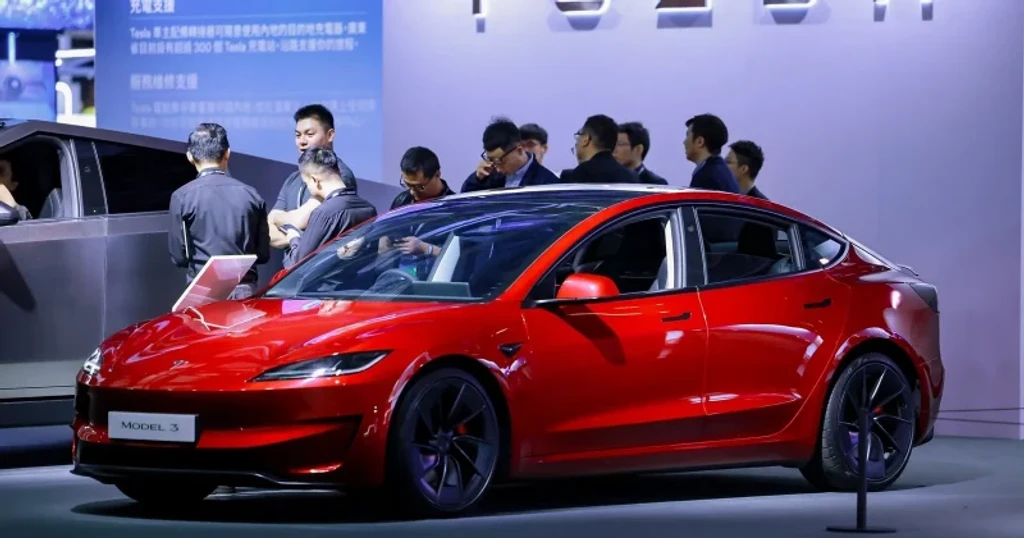
Tesla has officially launched its supervised Full Self-Driving package for the Model 3 in China, priced at approximately $9,400 for a one-time purchase. The rollout marks a major software push in its second-largest market, arriving just as Chinese rivals accelerate their own autonomous driving efforts.
However, due to strict local regulations, the system cannot be marketed as "Full Self-Driving." Instead, it is branded as "Navigation on Autopilot" or "Intelligent Assisted Driving," reflecting its true classification as a Level 2 driver-assistance system. The driver must remain alert and keep hands on the wheel.
The underlying software is identical to the U.S. version, featuring neural-net vision, lane changes, intersection navigation, and complex urban driving capabilities. Initial reviews indicate competent handling of dense Chinese traffic, though parking-lot navigation remains under development.
The competitive landscape is fierce. XPeng and Huawei have developed robust driver-assistance systems tailored to local conditions. XPeng's president has framed Tesla's launch as a benchmark, signaling readiness to compete. Huawei's ADS system also enjoys strong local reviews.
Strategically, the launch feeds critical driving data into Tesla's neural networks, enhancing its AI development. The one-time purchase model prioritizes rapid adoption and data collection over recurring subscription revenue, contrasting with Tesla's European subscription strategy.
For investors, the launch is significant but not transformative. The technology remains Level 2, not autonomous driving. Chinese consumers have many competitive local alternatives. Watch adoption numbers over the next quarters to gauge whether Tesla's system justifies its premium.