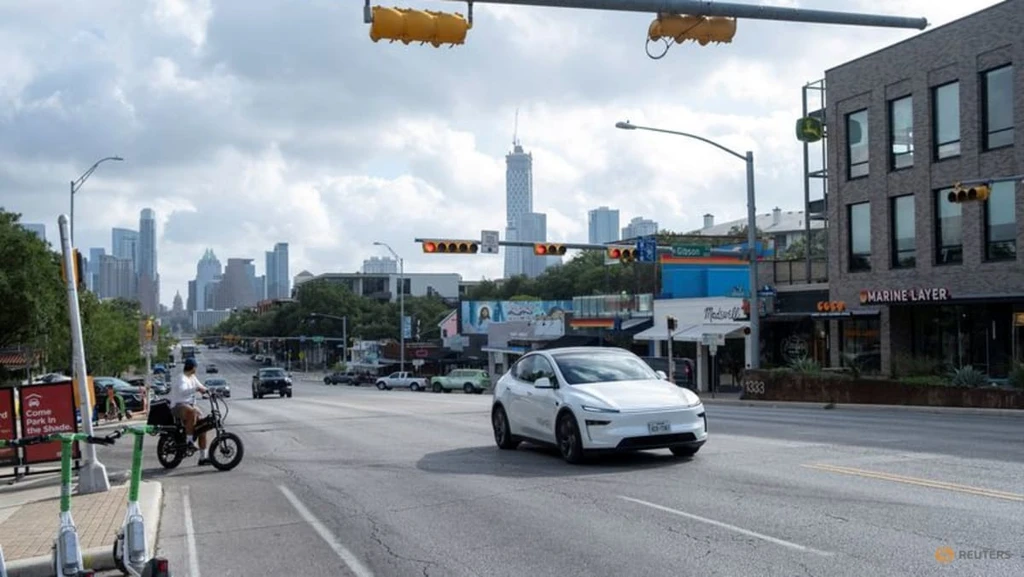
DALLAS - Tesla’s expansion of its robotaxi service to Dallas and Houston, touted by investors as a milestone for Elon Musk’s driverless-tech vision, is still in a beta phase with significant service gaps, according to Reuters tests.
Reporters found long wait times, no availability at peak hours, and drop-off spots far from destinations. In Dallas, a reporter spent nearly two hours for what would be a 20-minute drive. The app repeatedly showed “high service demand” or “no rides available.”
Tesla’s stock, valued at $1.6 trillion, largely reflects investor bets on its robotaxi future. Musk claims the technology “works anywhere,” but service remains confined to Dallas, Houston, and Austin. On a recent earnings call, Musk acknowledged a cautious approach to avoid injuries.
In some Dallas rides, passengers were dropped off a 15-minute walk from their destination, with remote attendants citing “restricted” areas. A robotaxi failed to make a left turn four times, confused by an unusual intersection. In Houston, service is limited to a small suburban area. One reporter booked a ride that was later canceled; no other cars were available for 30 minutes.
Even in Austin, where robotaxis have been operating for nearly a year, wait times exceeded 15 minutes half the time, and 27% of checks found no cars available. Tesla operates about 50 vehicles in Austin, compared to Waymo’s 250+.
Despite no major crashes in Austin, Tesla has reported 15 minor incidents since August. However, the company has asked regulators to redact all crash information. Austin police noted that Tesla robotaxis often drive 5 mph above the speed limit, which the company says is to keep with traffic flow.