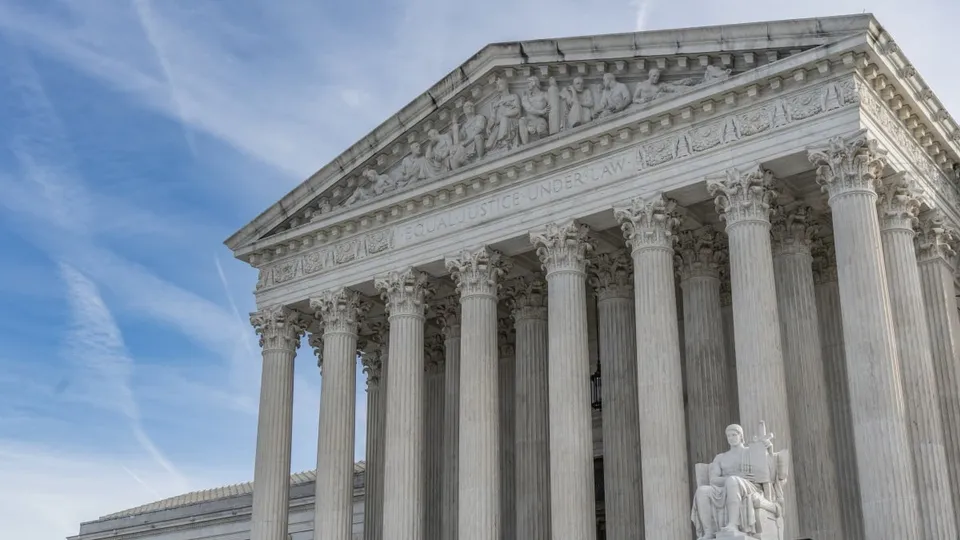
The Supreme Court has ruled against most of President Trump's controversial tariffs, a significant decision impacting economic policy. In a 6-3 ruling, the court found that tariffs enacted under the International Emergency Economic Powers Act (IEEPA) were improper.

While some tariffs, like those on steel and aluminum, may continue under different legal bases, the ruling invalidates reciprocal tariffs and a flat 25% tariff on goods from countries like Canada, China, and Mexico.
This raises questions about potential price changes for consumers, particularly in the technology sector. Tariffs increase the cost for U.S. importers, who often pass these costs on to consumers, leading to higher prices. However, experts caution that a price decrease is not guaranteed.
Several factors complicate a simple price rollback. "Sticky prices" mean that once prices rise, they often do not fall quickly, if at all. Consumer demand also plays a role; if products sell well at higher prices, companies have little incentive to lower them.
Furthermore, price increases are not solely attributable to tariffs. The burgeoning demand for computer components, such as RAM and GPUs, from AI companies is driving up prices independently. This shortage means that even without tariffs, devices like gaming consoles, laptops, and cars could see further price hikes.
Given the uncertainty, consumers are advised to make purchasing decisions based on product value and traditional sales, rather than anticipating significant price drops due to the tariff ruling. The current shortage of essential computer components presents a more immediate risk of rising prices.