The United States has launched Tech Corps, a program designed to bring American technical and scientific expertise to partner nations. White House science and technology adviser Michael Kratsios announced the initiative, framed as a 21st-century evolution of the Peace Corps.
Tech Corps aims to provide thousands of American volunteers with technical backgrounds the opportunity to assist developing countries in adopting U.S. AI technology. This initiative will offer "last-mile support in deploying powerful AI applications" across sectors like health, education, and agriculture.
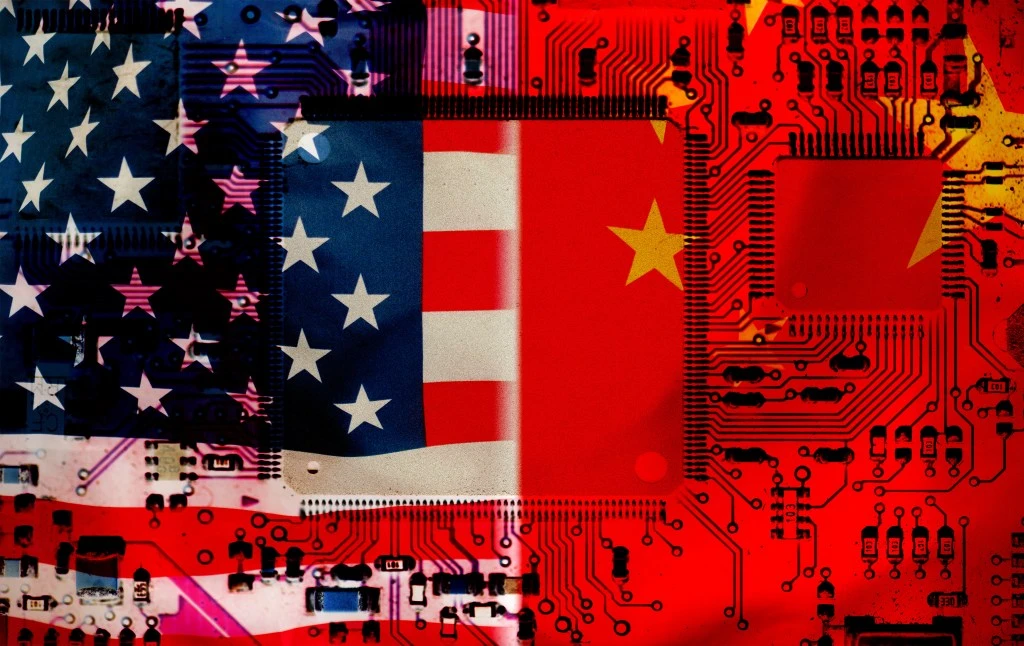
Beyond development aid, Tech Corps serves a strategic purpose: to steer nations towards American AI hardware and software, directly competing with Chinese alternatives. The U.S. views AI as critical for future economic growth, national security, and global competitiveness. "American AI can’t just be the best in the world in terms of quality, it has to be the most accessible," noted Ryan Fedasiuk, American Enterprise Fellow.
The program is part of a broader U.S. strategy to promote its AI technology stack abroad. This includes financing initiatives and a "National Champion Initiative" to support companies utilizing American technology. India is expected to be a key participant.
While the U.S. leads in AI chips, data centers, and deep learning frameworks, China is increasingly competitive with open-source models, particularly in the Global South, due to lower pricing and efficiency. Chinese open-weight models are gaining traction, with some surpassing U.S. models in downloads.
Analysts warn of potential Chinese infrastructural lock-in and security risks, drawing parallels to Huawei's dominance in 5G. The U.S. currently accounts for a significant majority of global large language model site visits, with many Fortune 500 companies utilizing U.S. AI technologies.
However, the diffusion of Chinese open-weight models presents a challenge. Experts suggest a potential future where China builds profitable applications on U.S. infrastructure. To counter this, initiatives like Tech Corps are seen as crucial.
Unlike the U.S. approach, China actively deploys science and technology diplomats globally to monitor breakthroughs and identify investment opportunities. The U.S. has a limited presence of technology-focused foreign service officers.
Some experts believe that export controls on advanced semiconductor chips could be more effective than inducements alone. They emphasize the need for both positive incentives and restrictive measures to prevent the deployment of untrusted infrastructure.