
The United Nations Development Programme (UNDP) is exploring blockchain technology as a critical tool for modernizing public infrastructure. A recent UNDP report highlights over 40 global pilot projects utilizing blockchain to bolster transparency, speed, and accountability in public systems.

These initiatives span diverse areas including payment infrastructure, social safety nets, climate finance, and community funding. The UNDP employs a pipeline model, fostering partnerships between governments, blockchain startups, and local companies to address specific public sector challenges. This approach allows institutions to test new tools for use cases like improving payment systems for micro-entrepreneurs or regional environmental governance.
UNDP views blockchain as a trusted ledger for coordination and verification, enabling shared records and traceable transactions. However, the program emphasizes that these benefits are contingent on robust institutional safeguards, good governance, and responsible adoption to mitigate risks associated with smart contracts or payment systems. The technology is deemed useful only when integrated with strong oversight.
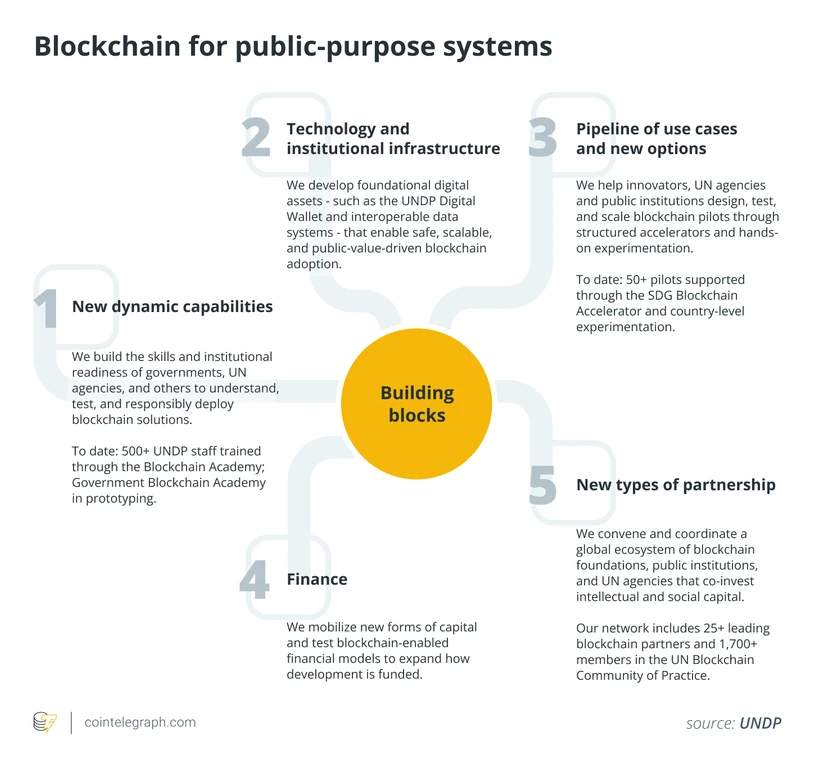
A key aspect of UNDP's strategy is platform-agnostic implementation, ensuring that new digital infrastructure remains open, interoperable, and free from vendor lock-in. The report details how blockchain can enhance efficiency and transparency in payments, financial access, identity systems, and climate programs, particularly in developing nations with limited trust and fragmented infrastructure.