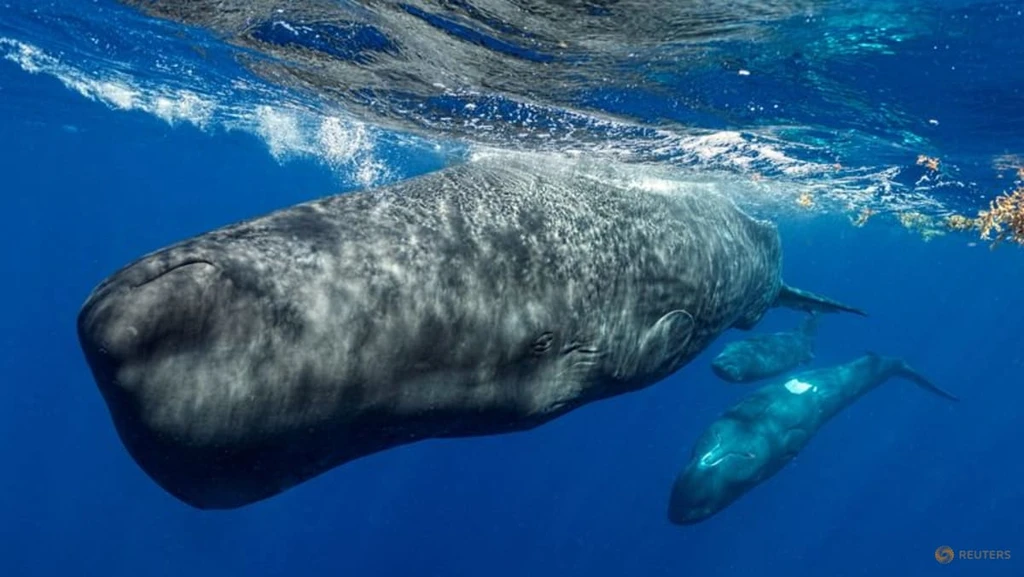
An autonomous underwater robot is now tracking sperm whale conversations in real time. The glider, developed by Project CETI, uses four hydrophones to detect whale clicks, known as codas, and automatically steers itself toward the sound source using a feature called "backseat driver."
"The underwater glider is listening for whales via four hydrophones and then steering itself toward them," said David Gruber, founder and CEO of Project CETI and a co-author of the study published in the journal Scientific Reports.
Sperm whales dive to depths of more than one mile for about 50 minutes each hour, making continuous observation difficult. Traditional methods rely on suction tags that fall off after a few days or stationary sensors that lose contact when whales move away.
The new glider, a small robot that changes buoyancy to rise and sink, can "make decisions in real time while it's still underwater," Gruber said. It stays with a single whale for extended periods-potentially months. This marks a shift "from brief encounters to continuous relationships."
The technology could help scientists understand how calves learn vocal patterns from their mothers and how whales respond to human activities like shipping and offshore construction. By linking whale behavior with environmental pressures, the data could inform evidence-based policy decisions such as ship speed reductions or fishing restrictions.
Precise localization remains a challenge, as the glider can detect direction but not exact position. The robot also must surface every few hours to communicate. But for Gruber, the moment the glider acted on its own offered a glimpse of the future: "We're beginning to build systems that can operate independently and respond to the natural world as it unfolds."