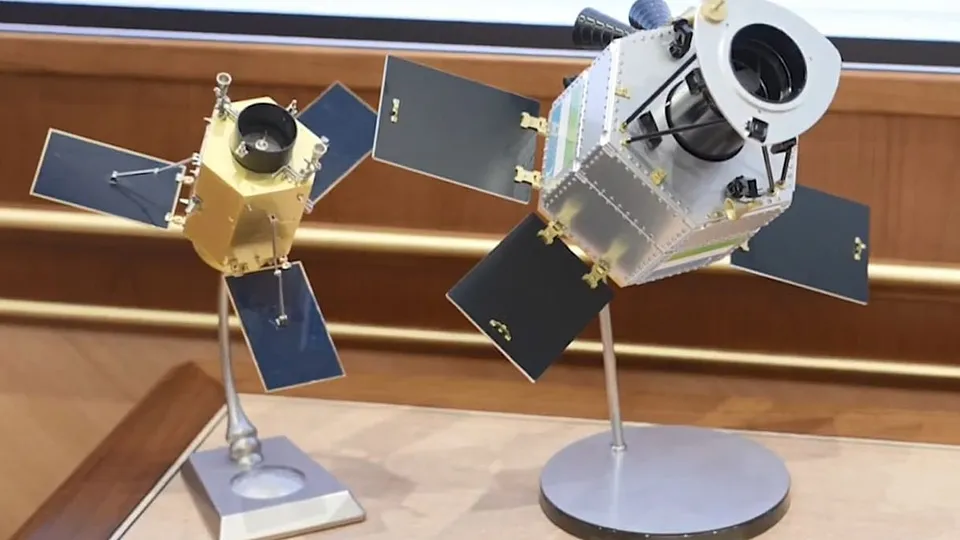
Uzbekistan is preparing to launch its first domestically developed scientific satellite and send its first national astronaut into orbit. These initiatives mark a significant effort to build technical capacity, secure independent data, and enter the global space sector.
Officials in Tashkent view the program primarily as an economic and institutional project, driven by a tripled demand for remote sensing data in the past five years. Satellite monitoring is now utilized by over ten government agencies and all regional administrations for sectors including agriculture, natural resource management, and regional planning.
“Through space data, we are identifying economic opportunities that cannot be seen with the naked eye and turning them into real sources of income,” stated Uzbekistan's President Shavkat Mirziyoyev.
Uzbekistan confirmed plans to launch a 6U CubeSat named “Mirzo Ulugbek” in 2028. A 6U CubeSat is a compact satellite, typically measuring around 10 × 20 × 30 centimeters and weighing under 12 kilograms. This smaller scale makes it a cost-effective and rapid option for Earth observation, technology demonstration, and scientific experiments.
The project is designed as a capacity-building step, aiming to strengthen Uzbekistan’s national Earth observation database for agriculture, forestry, and environmental monitoring. Technical requirements have been defined following international reviews.
Muhiddin Ibragimov, Deputy Director of the Uzcosmos Agency, emphasized the focus on building sustainable expertise, noting that the CubeSat approach requires moderate investment for emerging nations.
Seven Uzbek master’s students are currently in Japan, studying at Kyushu Institute of Technology to design and prepare the satellite. This program combines theoretical instruction with practical, hands-on training in satellite technologies.
Alongside satellite development, President Mirziyoyev has prioritized training Uzbekistan’s first national astronaut for a short-duration orbital mission in cooperation with international partners. This endeavor aims to enhance the country’s international image, foster scientific development, and inspire young people in science and technology.
Samarkand is also scheduled to host the International Astronautical Congress (IAC) in 2028, attracting global space industry leaders.