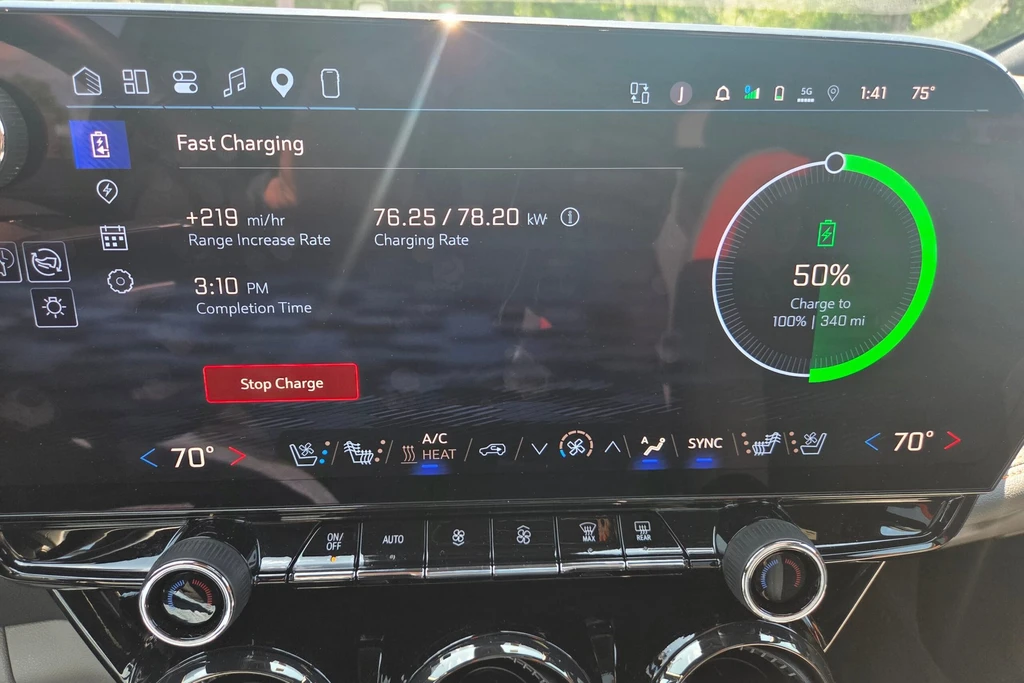
Warmer temperatures sweeping across the U.S. bring a significant boost for electric vehicle owners: better battery range and faster charging times.
A 2024 Consumer Reports study found EV batteries perform 25% better on range at 70 mph in temperatures above 20 degrees. On a mild 65-degree day, tested models averaged nearly 243 miles per charge, compared to about 182 miles at 16 degrees. On warm summer days, that average climbed to 265 miles.
Gas cars also suffer in cold-the U.S. Department of Energy says fuel economy is about 15% higher at 77 degrees than at 20 degrees. EVs, however, see the biggest swing.
Why Warmth Helps
The ideal operating temperature for an EV battery is between 68 and 86 degrees. Colder temperatures slow the electrochemical process, requiring energy just to warm the battery before charging. In warmer conditions, lithium ions flow more efficiently, increasing capacity.
Tips for Spring and Summer Performance
Charge while the battery is warm. Plug in immediately after driving, or use your car's preheat function when navigating to a charger.
Park indoors to keep the battery closer to its ideal temperature. A car cover can also help.
Use air conditioning sparingly. Running A/C while charging can slow charging time. Once temperatures top 80 degrees, range loss averages 2.8%; at 90 degrees it's 5%; at 100 degrees it could hit 31%.
Maintain proper tire pressure. Underfilled tires increase rolling resistance, reducing range.
Drive in eco-mode to minimize energy consumption.
Keep the battery above 20% charge. A low battery may not have enough power to warm up for charging.
Less than 2% of U.S. vehicles are electric, according to Experian. But EV sales accounted for 7.8% of all new car purchases in 2025, per Cox Automotive.