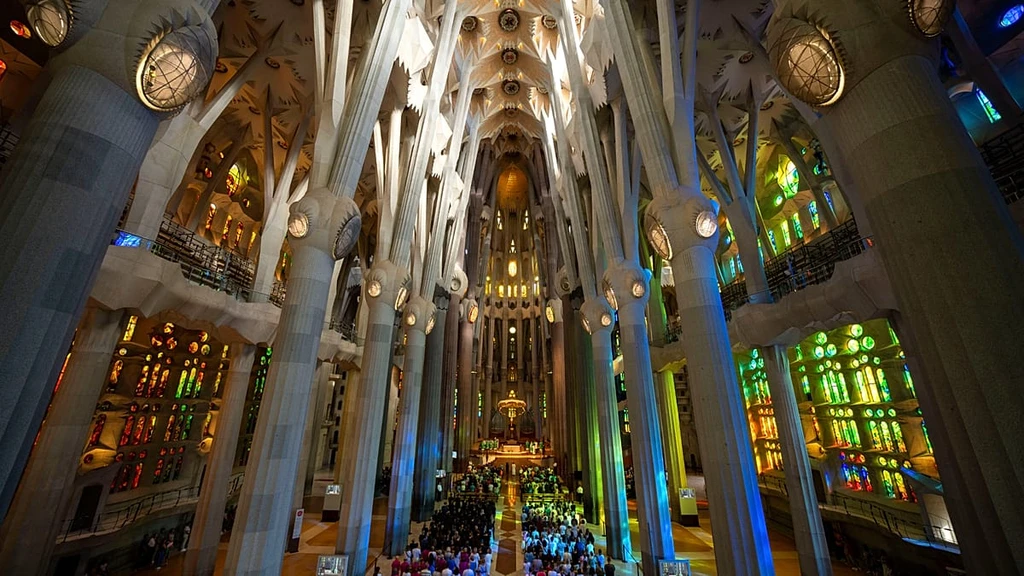
Barcelona is synonymous with the visionary architect Antoni Gaudí, whose nature-inspired structures define the city's skyline. As the centenary of his death approaches, his architectural masterpieces remain UNESCO World Heritage sites, captivating visitors worldwide.
Casa Vicens, Gaudí's first major commission, showcases an early blend of Mudejar, Persian, and Byzantine styles, adorned with vibrant tiles and palm-frond inspired grilles, reflecting his keen eye for nature and light.
Casa Batlló exemplifies Gaudí's flourishing style, inspired by the sea and organic forms. Its "House of Bones" facade and dragon-scale roof, referencing Catalan legend, lead to an interior that seamlessly blends aesthetics and engineering, with a striking central light well.
Park Güell, originally planned as a residential estate, allowed Gaudí to integrate buildings into natural landscapes using his signature trencadís mosaic technique. The park features over 400 dragons and innovative water systems, creating a space between reality and fantasy.
Casa Milà, also known as "The Stone Quarry," pushed architectural boundaries with its undulating stone facade and structural innovation. Its open floor plans and sculptural terrace with unique chimneys highlight Gaudí's radical design philosophy.
Basílica de la Sagrada Família, Gaudí's most ambitious project, continues its century-long construction. Fusing Gothic and Art Nouveau elements with his distinct style, the basilica's tree-like columns and foliage-inspired ceiling embody his vision of a 'temple of nature.' It recently reached its maximum height, with scaffolding set to be removed for its inauguration this June, coinciding with the centenary of Gaudí's death.