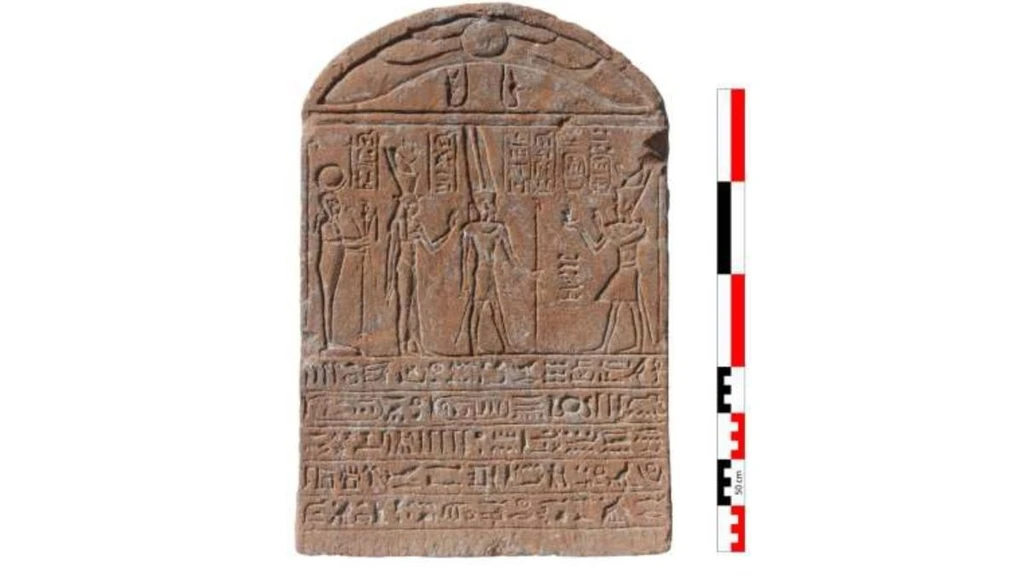
Archaeologists in Luxor, Egypt, have unearthed a 2,000-year-old sandstone monument, a stela, depicting the Roman emperor Tiberius as an Egyptian pharaoh. The roughly 23.6 by 15.7-inch slab was found during restoration work at the Karnak temple complex.
The monument dates to Tiberius' rule (A.D. 14-37). It features Tiberius standing before the Egyptian deities Amun, Mut, and Khonsu, a common practice to legitimize Roman rule within Egypt's religious framework. This representation emphasized the emperor's role as a protector of temples and upholder of Maat, the Egyptian concept of order and justice.
The stela likely served as an architectural marker commemorating the renovation of a temple wall. Egypt became a Roman province after Augustus defeated Mark Antony and Cleopatra VII in 31 B.C. Tiberius, Augustus' successor, never visited Egypt but exerted authority through envoys, with his name appearing on monuments to maintain regional religious institutions.
The stela will be housed in a museum, continuing its display to a new audience.