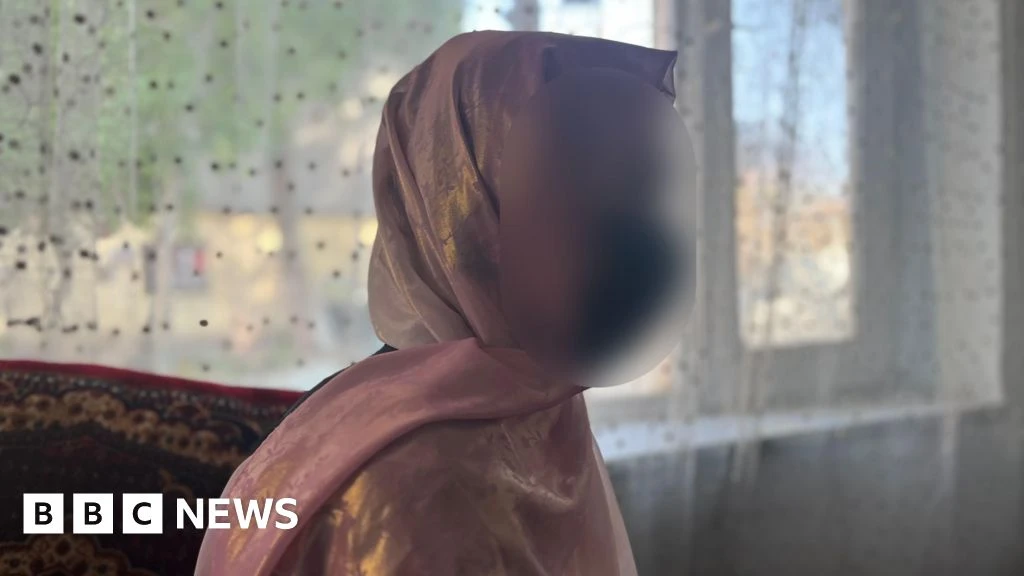
A 19-year-old Afghan woman, identified as Alia for her safety, fled her village in Daykundi province to Kabul last year to escape a forced marriage. Traveling by taxi with her cousin, both covered head to toe, they managed to avoid Taliban checkpoints enforcing rules against women traveling without a male guardian.
Alia's escape is part of a broader crisis in Afghanistan, where the Taliban has banned girls over 12 from attending school for nearly five years. With formal education shut off, marriage has become the only option for millions of girls. Alia now takes an English language course, one of the few educational opportunities available to girls who can afford them.
"Before the ban, my parents encouraged me to become a pilot," Alia said. "Now they say the best way for me is to get married because I can't go to school, to university, I can't even work."
Alia fears accepting a marriage proposal could end her dreams. "Some families can be very restrictive," she said. "I will resist it until my very last breath."
Another woman, Shama, was forced into marriage at 18 after the Taliban takeover. Now a mother of two, she said, "It is really difficult for me. I feel like I am trapped in my home. I only live for my children."
According to the UN, if the education ban continues until 2030, more than two million girls will be deprived of schooling beyond primary level in a country with one of the world's lowest female literacy rates.
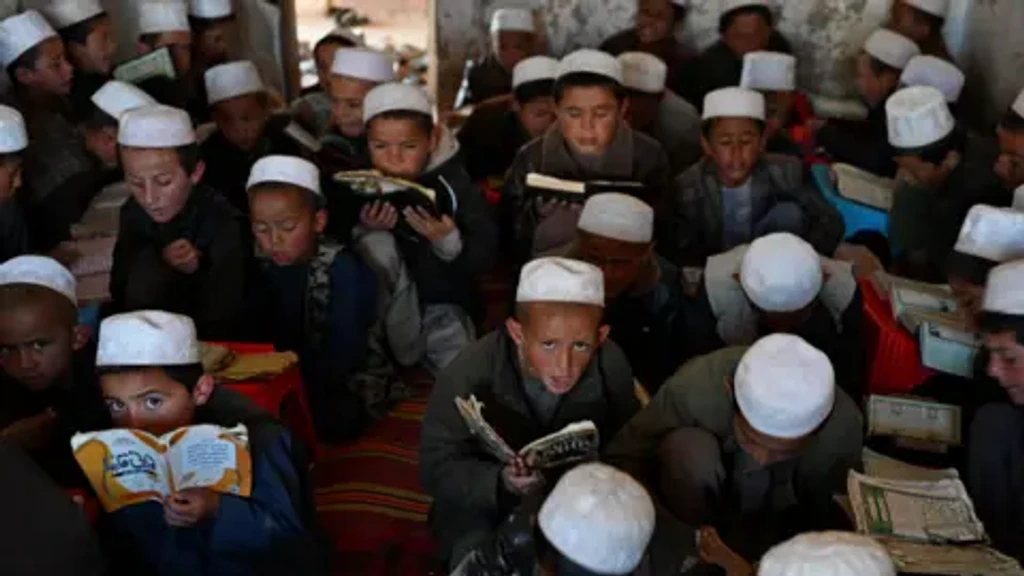
These boys are attending a madrasa, or religious school. Some religious education is available to girls
Despite repeated questions, the Taliban government has not provided a clear timeline for reopening girls' schools. Deputy spokesman Hamdullah Fitrat deflected inquiries to the education ministry, which did not respond.
The Taliban's supreme leader has only hardened his stance, and recent laws imply legal approval of child marriage, with a minor girl's silence allowed to be interpreted as consent.
"If we hadn't been forgotten, then something would surely have been done by now," Alia said.
"In a world where your daughters are allowed to study and work, let them do it," said Kamila, Shama's mother. "Here in Afghanistan, it's over for us."