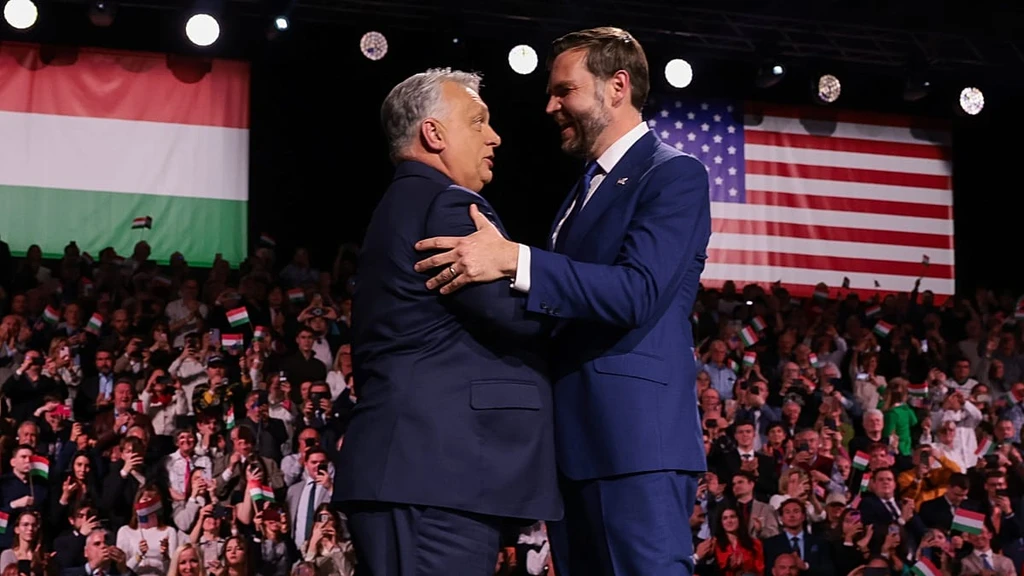
Viktor Orbán's significant election loss in Hungary, ending his 16-year tenure, is prompting a reassessment among Europe's far-right parties regarding endorsements from Donald Trump and JD Vance. Once seen as an asset, the association with the MAGA movement is increasingly viewed as a political liability.
French National Rally MEP Thierry Mariani stated that while Hungary has close ties to the U.S., this is not the case for France. Fabrice Leggeri, also from the National Rally, criticized U.S. trade policies and its involvement in the Iran conflict, highlighting cultural and political differences between Europe and the U.S.
JD Vance's recent visit to Budapest, where he criticized "bureaucrats in Brussels," echoed familiar far-right themes. However, his prior endorsements of parties like Germany's Alternative for Germany are now seen as potentially embarrassing as sovereigntist movements distance themselves from the U.S. government.
Analysts suggest that Trump's actions, particularly concerning Iran and Venezuela, contradict the national sovereignty principles championed by many European far-right politicians. The ongoing war in Iran, for instance, has been linked by some in Europe to rising energy prices, further straining consumer purchasing power.
Political science professor Dave Sinardet noted that Hungarian voters appeared more focused on domestic issues than the ideological battles pushed by Orbán. He believes Vance's visit may have been counterproductive, reinforcing perceptions of foreign interference. Sinardet cautioned that close ties with figures like Trump and Putin could be detrimental, especially for parties emphasizing national sovereignty.
Belgium's Defence and Trade Minister Theo Francken called Vance's support a "foolish campaign move," stating that "everything and everyone they support ends up losing elections."
While Orbán's defeat is a blow to the European far-right, as he was a prominent figurehead, analysts caution against viewing it as a broader setback. Many far-right forces maintain structural strength and representation across several EU countries, suggesting that populism will likely persist.