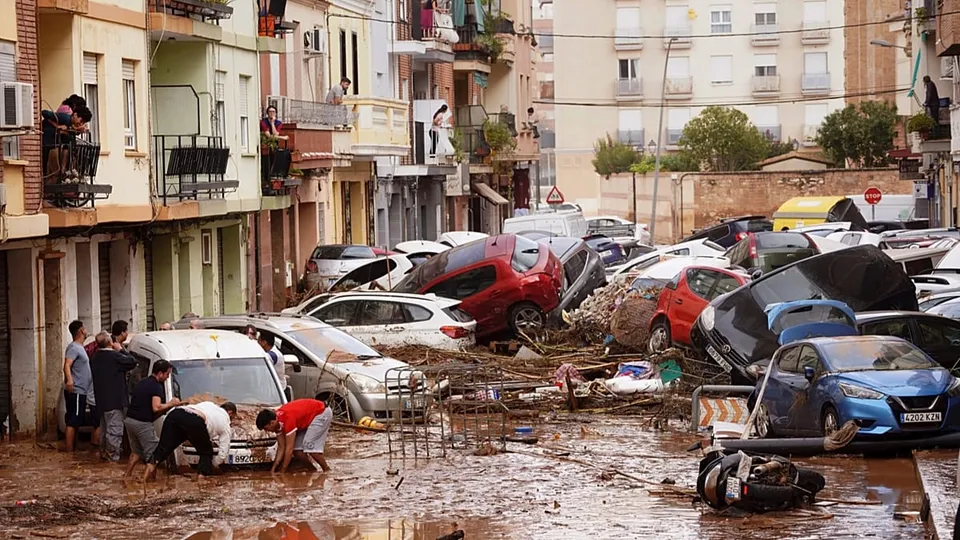
Spain continues to grapple with the aftermath of one of its most devastating floods. On October 29, 2024, an intense DANA weather system struck Valencia, unleashing flash floods that overwhelmed infrastructure and claimed over 230 lives, causing an estimated €29 billion in damages.
A new study published in Nature Communications reveals that human-caused climate change, driven by fossil fuel consumption, significantly worsened the disaster. Researchers simulated the storm under current warming conditions versus a hypothetical cooler climate. Their findings indicate a 21% increase in rainfall rate over a critical six-hour period, a 56% increase in the area experiencing over 180 millimeters of rain, and a 19% rise in total rainfall in the Júcar River basin due to rising global temperatures.
Atmospheric scientists note that for every degree Celsius of air temperature increase, the atmosphere can retain approximately seven percent more moisture, leading to more intense rainfall. Record-high sea temperatures in the Mediterranean and North Atlantic just prior to the DANA event further contributed to the storm's severity by increasing atmospheric water vapor.
Experts emphasize the urgent need for enhanced climate change adaptation and urban resilience measures to counter the growing threat of flooding in the Western Mediterranean. Spain is already implementing strategies, including a national network of climate shelters and increased funding for flood and fire prevention plans.