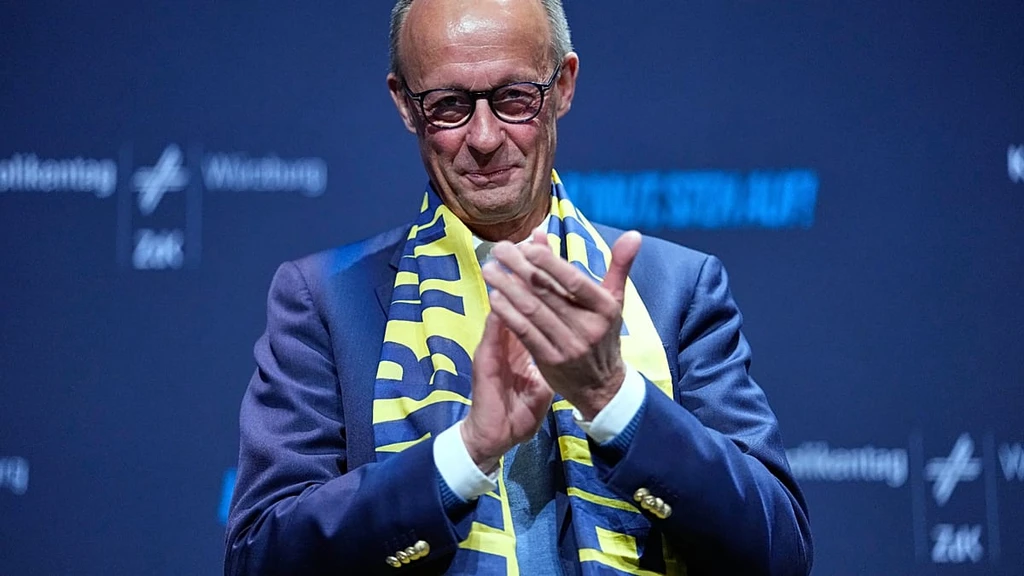
German Chancellor Friedrich Merz admitted shortcomings in his conservative-Social Democrat coalition during a panel at the German Catholic Convention in Würzburg. He acknowledged too many arguments and too little being achieved, promising clearer communication moving forward.
A recent ARD survey shows only 13% of Germans are satisfied with the government after one year, and Merz's approval rating has plummeted to 16%.
Climate activists briefly disrupted the event, but were quickly removed by security.
Merz stressed that Germans must work harder to secure existing prosperity, noting lifetime and annual working hours lag behind other industrialized nations. He called for a "collective push" to lead the country out of its current difficulties.
Touching on foreign policy, Merz took a fresh swipe at the United States, saying he would no longer advise his children to study or work there due to the social climate. He reaffirmed Germany's commitment to a social market economy over "unfettered capitalism."
Later, Merz posted on X that he had a "good phone call" with President Donald Trump. He stated they agreed Iran must come to the negotiating table, open the Strait of Hormuz, and never obtain a nuclear weapon. They also discussed a peace settlement for Ukraine and coordinated positions ahead of the NATO summit in Ankara.
This marks a shift from earlier tensions, when Trump sharply criticized Merz after similar remarks about the US.