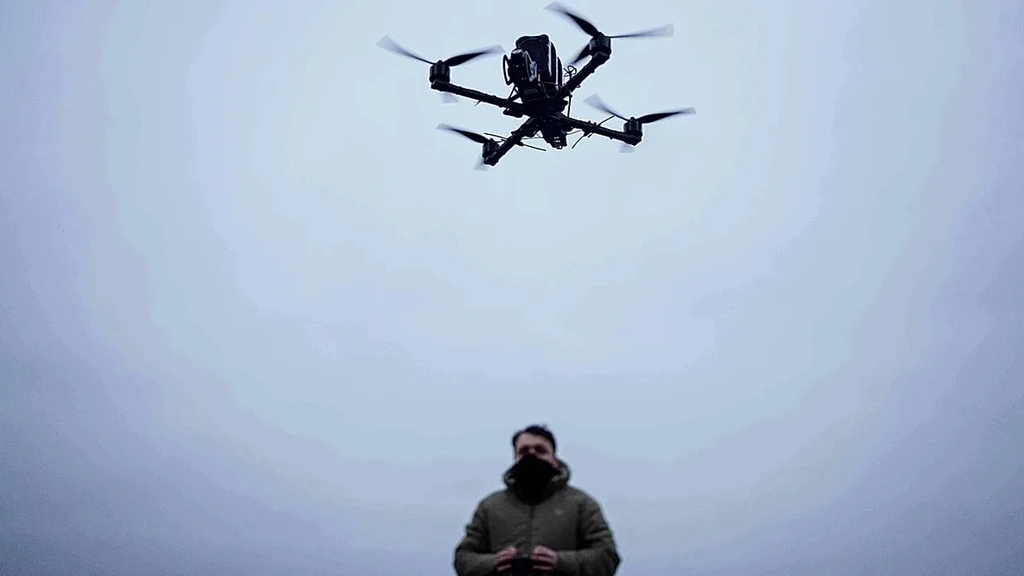
Since Russia's full-scale invasion in 2022, its main advantage has been scale. But four years in, Ukraine's drone technology is challenging that edge, reshaping modern warfare.
What began as adapting civilian drones has culminated in history's first enemy position taken over using robotic systems alone. President Zelenskyy said ground robotic systems performed over 22,000 missions in early 2026, saving lives by replacing soldiers in danger.
Russia now loses up to 35,000 personnel monthly, with Zelenskyy noting "up to 90% of Russian losses are caused by Ukrainian drones."
Kyiv's middle-strike campaign, hitting targets 20 to 200 kilometers from the frontline, has grown significantly. Strikes at 20-plus kilometers have quadrupled since February. Ukraine targets ammunition depots and command posts, forcing Russian logistics further back.
Defense Minister Fedorov described this "logistics lockdown" strategy to weaken Russian offensive capability. Combined with long-range strikes on Russia's oil infrastructure, Ukraine is causing a fuel crisis.
On May 17, Ukraine attacked the Moscow region, hitting military sites and oil targets over 500 kilometers from the border. Zelenskyy warned: "Territory 1,500 to 2,000 km inside Russia is no longer a 'peaceful rear.'" Nearly 40% of Russia's oil refining capacity is disabled.
Ukraine also intercepts around 90% of Russian Shahed-type drones using cheap, domestically produced interceptors costing €1,000 to €4,000 each. These have attracted interest from nearly 20 countries, with deals signed with Gulf states and a major EU agreement in preparation.
The remaining gap is anti-ballistic defense. Patriots remain the only effective shield against Russian ballistic missiles, but supply is tight. Zelenskyy has asked Trump for a license to produce Patriot interceptors in Ukraine, emphasizing: "Europe needs its own anti-ballistic defense so this war can finally end."