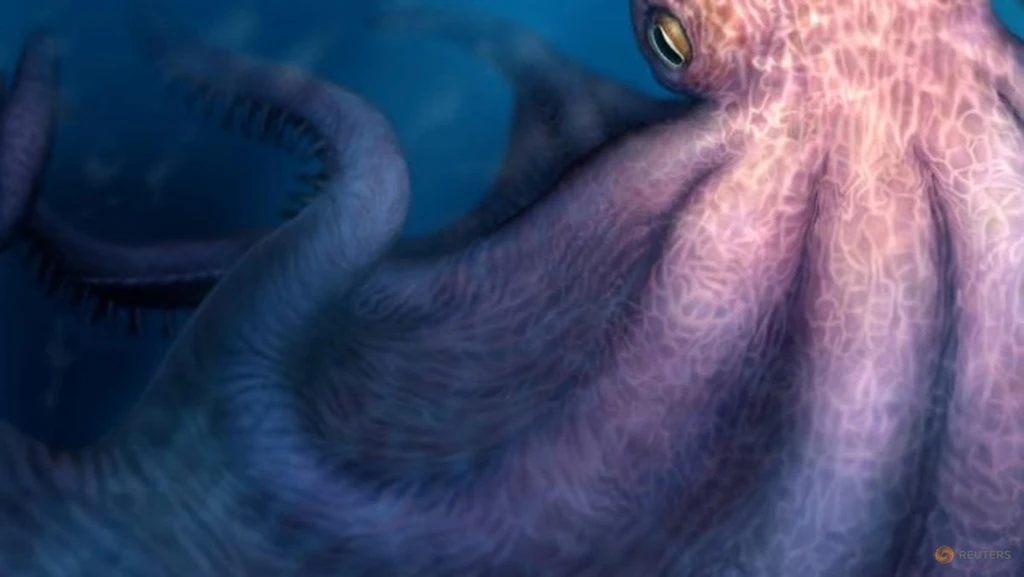
During the age of dinosaurs, an enormous octopus species, Nanaimoteuthis haggarti, lived in the seas, rivaling the mythical Kraken. Fossils suggest this creature, existing between 86 to 72 million years ago, measured up to 61 feet long.
Paleontologist Yasuhiro Iba of Hokkaido University stated these octopuses, with their advanced behavior and powerful jaws, were real "Cretaceous Krakens." Their existence demonstrates that giant invertebrates, not just vertebrate predators like fish, sharks, and marine reptiles, also functioned as apex predators in ancient marine ecosystems.
The wear patterns on fossilized beaks indicate these octopuses preyed on large fish and other sizable creatures, crushing bones and shells. Researchers also found evidence suggesting these ancient cephalopods possessed fins and exhibited intelligent, lateralized behavior, similar to modern "handedness."
These giant octopuses shared the Cretaceous oceans with formidable predators like mosasaurs, plesiosaurs, and large sharks, occupying the top tier of the food web and competing within the same ecosystem. This discovery reshapes our understanding of ancient ocean life, revealing a more diverse and complex predatory landscape.