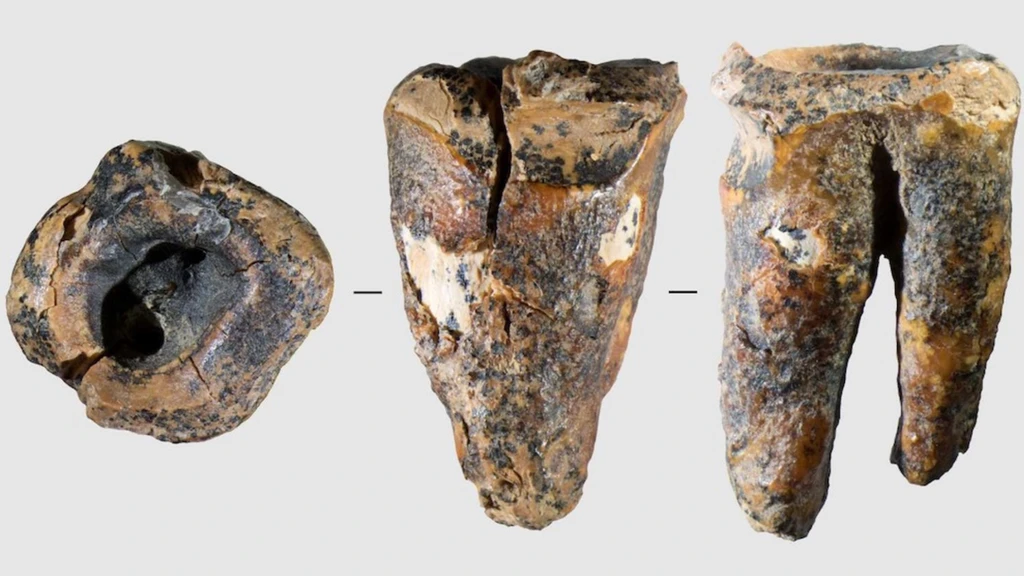
A Neanderthal in Siberia underwent a primitive dental procedure 60,000 years ago, according to a new study published in PLOS One. Researchers found a lower molar with a deep hole, determined to be from a stone drill used to clean out decay. This is the oldest evidence of intentional dental treatment, pushing back the known history of dentistry by 45,000 years.
Chagyrskaya Cave in southwestern Siberia, Russia, where the tooth was found in 2016. Microscopic analysis revealed straight grooves from tooth picking and a cavity with markings consistent with a twisting stone drill. Experiments on modern teeth confirmed that local jasper tools could create such marks.
The tooth discovered in 2016. Chew marks over the grooves suggest the individual survived for a significant time after the procedure. This indicates Neanderthals had sophisticated understanding of human biology and fine motor skills for invasive treatments, challenging the view that such medical knowledge is exclusive to Homo sapiens.