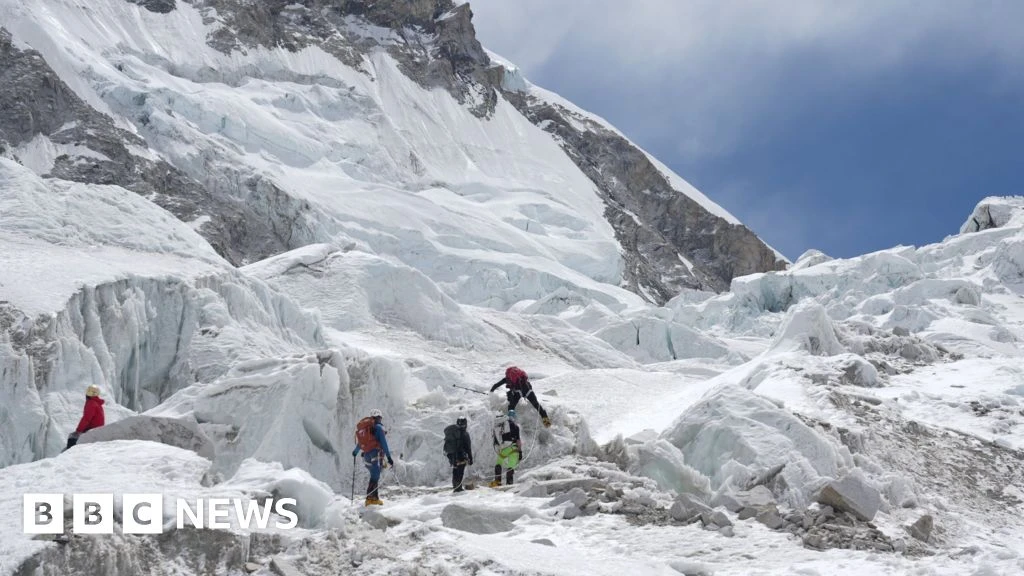
Mount Everest's peak climbing season faces significant delay as a massive, unstable glacier block, approximately 100 feet high, obstructs the primary route from Base Camp.
"Icefall doctors," responsible for securing ropes and ladders, have found no alternative to the 30-meter ice serac located just below Camp 1. Their only recourse is to wait for the natural melting of the obstruction, a process they hope will conclude within days.
This delay has pushed preparations weeks behind the optimal spring window. Prominent climber Purnima Shrestha expressed concerns from Base Camp about potential summit "traffic jams" due to the condensed climbing period. "Delays in the opening of the route have added concerns of possible 'traffic jams' to the peak this year," she stated.
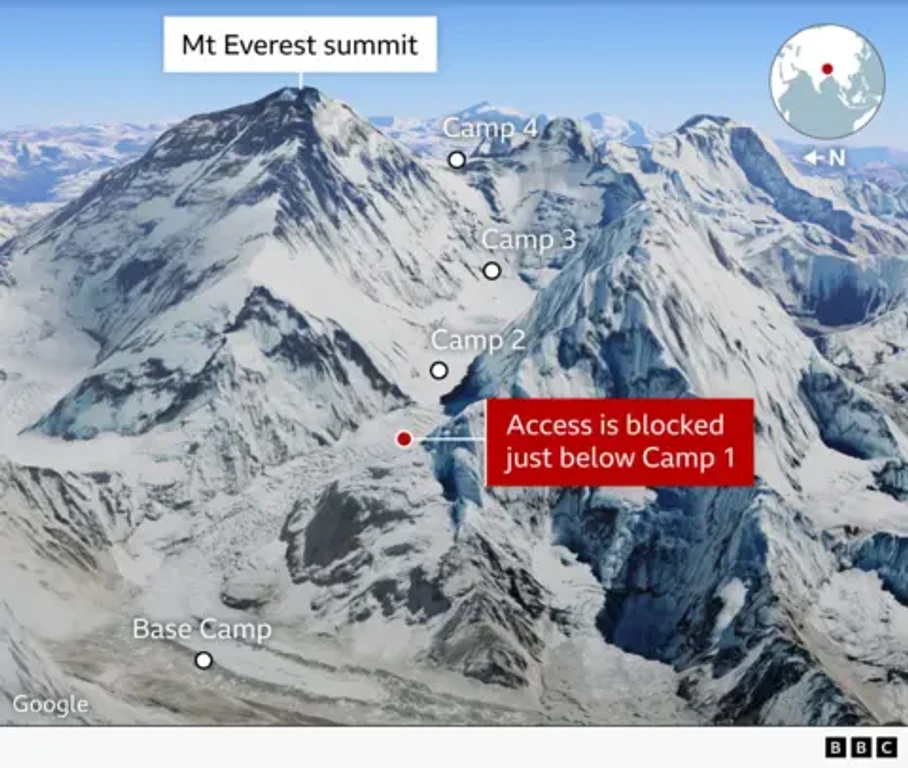
The Sagarmatha Pollution Control Committee (SPCC), which normally has the route secured up to Camp 2 by this time, is still facing the impassable icefall. "We don't have any options other than to wait for it melting and crumbling itself," confirmed SPCC base camp co-ordinator Tshering Tenzing Sherpa.
Nepal's Department of Tourism is exploring options, including potential helicopter airlifts of rope-fixing teams and their logistics to Camp 2 to expedite route clearance above the obstruction. Ram Krishna Lamichhane, the department's director general, indicated a cautious approach, prioritizing safety.
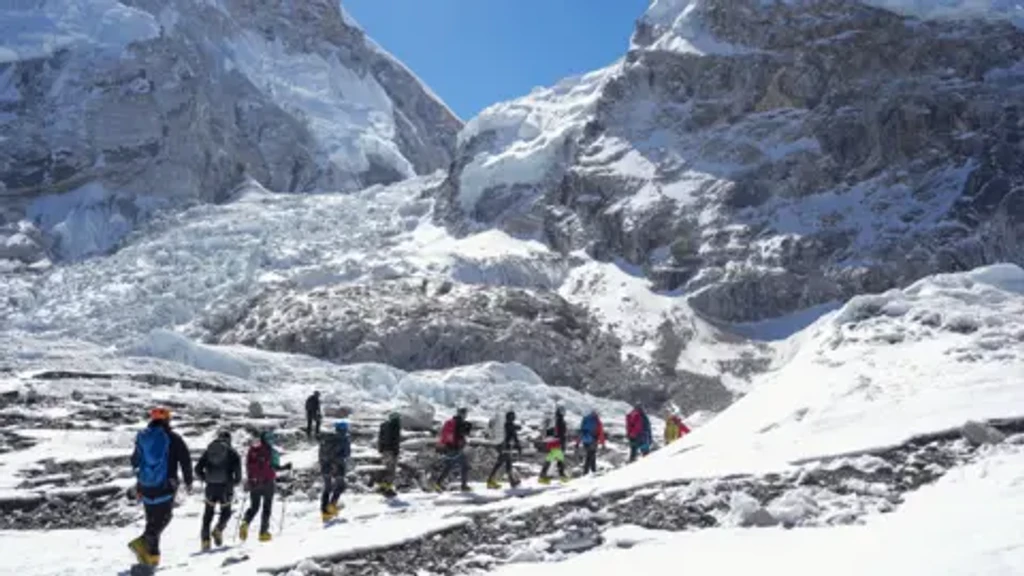
Despite the challenging circumstances and increased climbing permit fees, 367 permits have been issued, primarily to Chinese nationals. The climbing season, which typically runs until the end of May, is now under pressure to facilitate ascents within a narrowed window.