The World Health Organization has raised the public health risk from the current Ebola outbreak in the Democratic Republic of Congo from "high" to "very high."
WHO Director-General Dr. Tedros Adhanom Ghebreyesus announced the revision during a Friday briefing in Geneva. He said the risk remains "high" regionally in Africa, but "low" at the global level.
The outbreak involves a rare strain known as Bundibugyo Ebola, which has no proven vaccine and kills approximately one-third of those infected. To date, there have been 177 suspected deaths and nearly 750 suspected cases. Of those, 82 have been confirmed, including seven deaths.
An experimental vaccine has shown promise in animal models, but it is not yet guaranteed to work in humans. A second candidate vaccine is also in early development, but officials estimate it will take six to nine months before it is ready for testing.
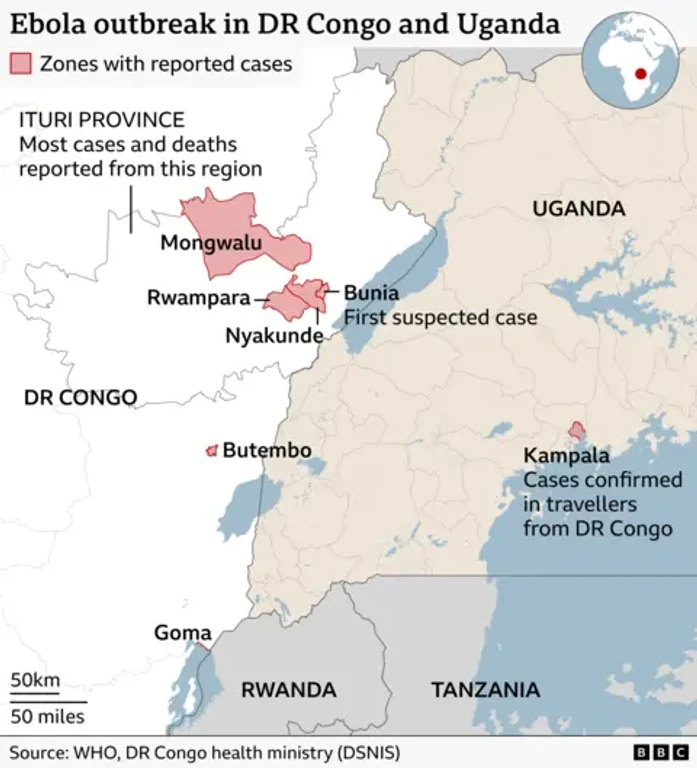
In neighboring Uganda, two confirmed cases linked to travel from DR Congo have been reported, including one death. Tedros described the situation there as "stable."
Ebola viruses typically infect fruit bats, but human outbreaks can begin when people handle or consume infected animals. The WHO declared the outbreak a public health emergency of international concern on Sunday, though it has not been classified as a pandemic.