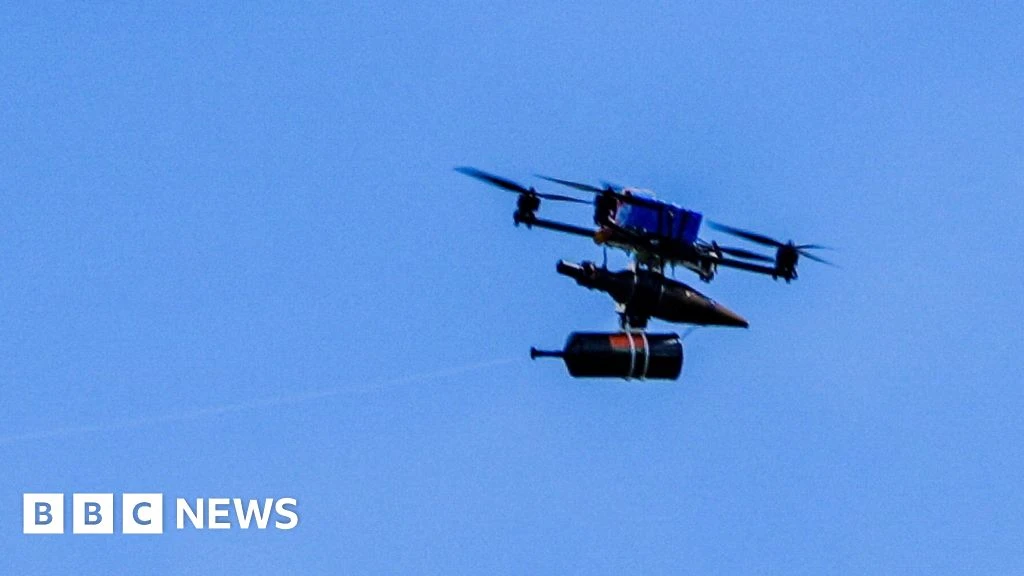
Hezbollah has turned fiber-optic drones into its primary weapon against Israel, exploiting a tactic learned from the war in Ukraine. These low-flying, unmanned aircraft are nearly impossible to detect because they operate without radio signals, relying instead on a thin optical wire that connects them to their operator.
Since the ceasefire began in April, Hezbollah has launched more than 100 drone attacks on Israeli communities across the border. Israeli officials report that eight of the 11 soldiers killed since the truce were hit by these drones. Civilians are also increasingly at risk, with attacks targeting border towns like Shomera, where a bus stop was struck minutes after a school bus departed.
Israeli forces are scrambling to adapt. Netting is used to entangle drones, and companies like Smart Shooter are developing automated targeting systems. But the military admits gaps remain in detection and interception. Prime Minister Benjamin Netanyahu has vowed to crack down, but local leaders say their hands are tied by the ceasefire and US President Donald Trump's efforts for a broader peace with Iran.