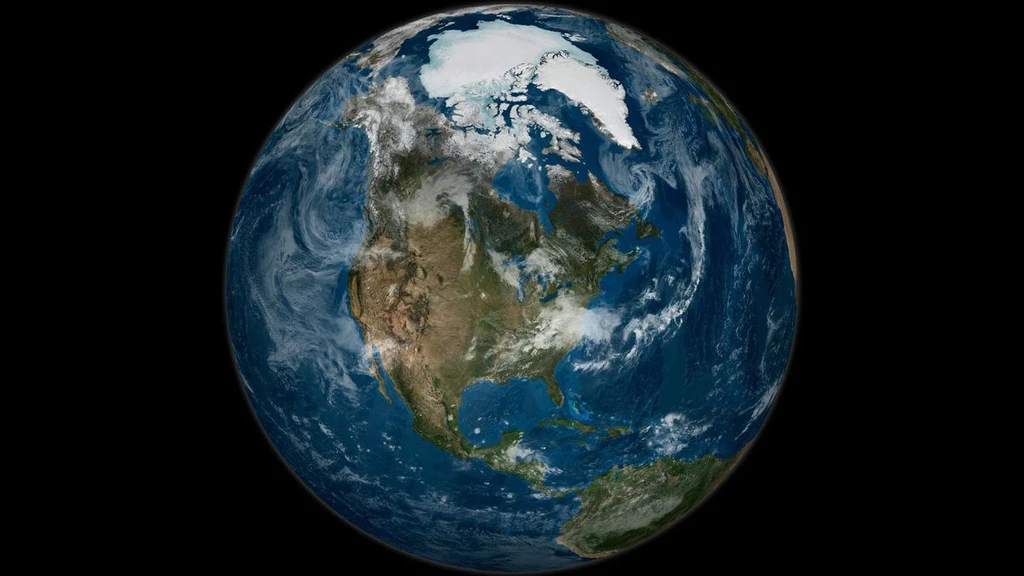
Human-driven climate change is causing Earth's rotation to slow at an unprecedented rate, with sea level rise increasing the length of days by 1.33 milliseconds per century, according to a study by geoscientists at ETH Zurich. This effect is mostly anthropogenic, caused by melting polar ice sheets and mountain glaciers.
While glacial isostatic adjustment, a process where the Earth's crust rises after the retreat of ice sheets, partially offsets this increase by 0.8 milliseconds per century, the net effect remains significant. Over the past 3.6 million years, the current rate of increase in day length is one of the highest recorded.
The researchers used fossilized foraminifera to track historical sea levels and day lengths, finding that under future warming scenarios, the day could lengthen by 2.62 milliseconds per century by 2080. Although imperceptible to humans, this change has implications for precise timekeeping in computing and spacecraft navigation.