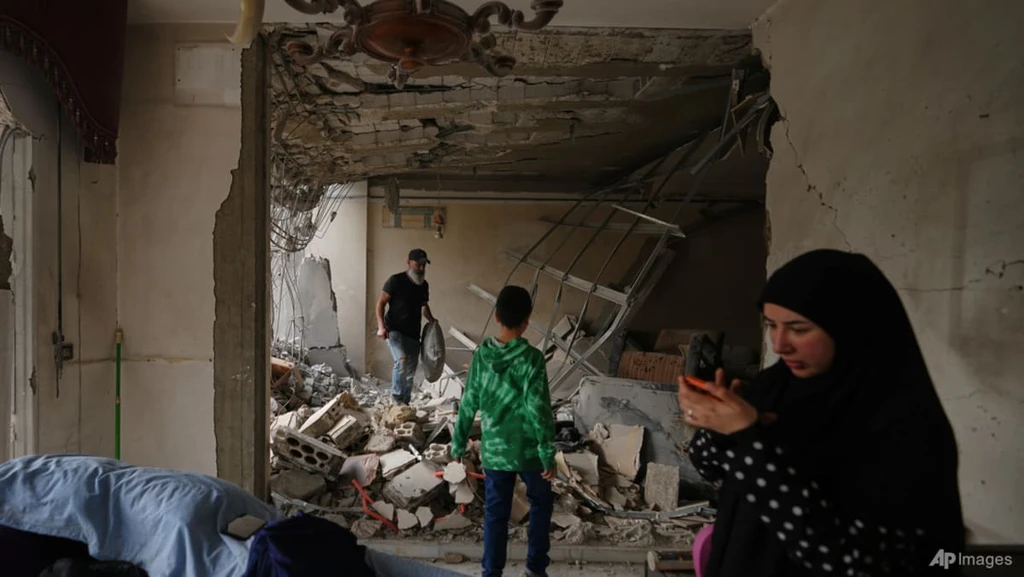
Israeli Prime Minister Benjamin Netanyahu stated on Monday that Hezbollah's rockets and drones pose a significant threat requiring military action. This comes as Israel's army has reportedly expanded strikes into Lebanon, even as ceasefire talks are underway.
Lebanese President Joseph Aoun indicated that direct negotiations with Israel are being pursued to end the conflict. He criticized those who initiated the war, labeling their actions as "treason." Hezbollah, meanwhile, claimed responsibility for attacks on Israeli targets in southern Lebanon.
Hezbollah's chief, Naim Qassem, described the direct talks as a "sin," while Israeli Defense Minister Israel Katz warned of catastrophic consequences for Lebanon if negotiations are rejected. Despite Hezbollah's opposition, Lebanon and Israel's US ambassadors have held high-level meetings in Washington, leading to a US-brokered ceasefire that has seen a three-week extension.
Netanyahu highlighted "two central threats from Hezbollah: the 122mm rockets and the drones," necessitating "operational and technological activity." Israel's military announced strikes on Hezbollah infrastructure in eastern Bekaa and southern Lebanon. The ceasefire allows Israel to act against "planned, imminent or ongoing attacks."
A view of damaged buildings in the aftermath of an Israeli strike on Friday, in Riyak, Bekaa valley, Lebanon, February 21, 2026. REUTERS/Mohamed Azakir
Lebanese state media reported Israeli airstrikes in southern towns, alongside artillery shelling and demolition operations. Hezbollah stated its fighters attacked Israeli troops and a bulldozer demolishing homes in Bint Jbeil.
President Aoun aims for an end to the state of war with Israel, drawing parallels to the 1949 armistice. He vowed not to accept a "humiliating agreement." Hezbollah, however, maintains its rejection of direct negotiations and its commitment to resistance, warning that Israeli forces will not remain on Lebanese soil.
Defense Minister Katz warned Hezbollah's leadership was "playing with fire," potentially engulfing all of Lebanon. He also accused President Aoun of jeopardizing Lebanon's future and stated Israel would not accept a ceasefire while attacks on its northern communities persist. Lebanese authorities reported 2,521 deaths since March 2.