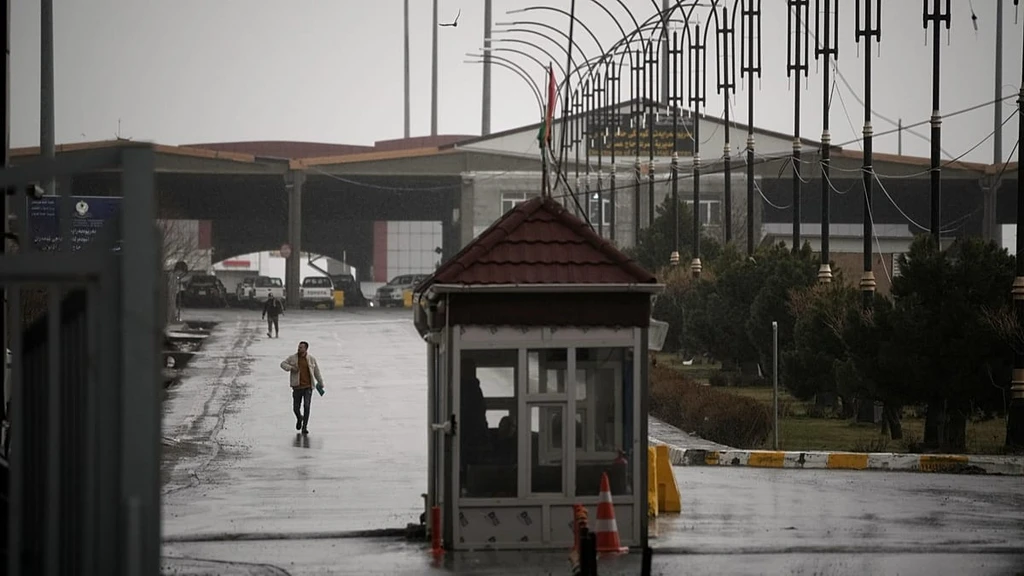
Iranians living near the border with Iraq's Kurdistan region are crossing into neighboring territory or gathering at the frontier just to get online, as Tehran's months-long internet blackout has cut tens of millions off from the outside world.
The Islamic Republic has justified the restrictions citing "security considerations" and "cyber warfare" countermeasures.
Citizens say the blackout has cut them off from independent news sources, made it impossible to reach family abroad, and destroyed livelihoods. Authorities have criminalized tools like VPNs and Starlink satellite internet.
A resident of Baneh, a border city of 100,000 just 30 kilometers from the nearest crossing, said: "After the war began, the internet was completely shut down... many merchants and shopkeepers needed internet access to continue their work." They turned to Iraqi SIM cards from Korek and Asiacell for partial coverage near the frontier.
An improvised internet shack appeared 3-4 kilometers outside Baneh, where people paid for hourly Wi-Fi access. Authorities raided the site, arresting more than 50 people, confiscating phones, and forcing detainees to sign pledges. About 10 remain in custody.

Limited options remain: costly "pro internet" packages (50 GB for ~€15), smuggled Starlink devices (risking prosecution and, in one case, death in detention), and VPNs. An economist cited daily losses of $30-40 million for Iran's economy.
A resident of Sardasht said conditions are "somewhat better" now, but most are using Iran's domestic "national internet" and waiting.