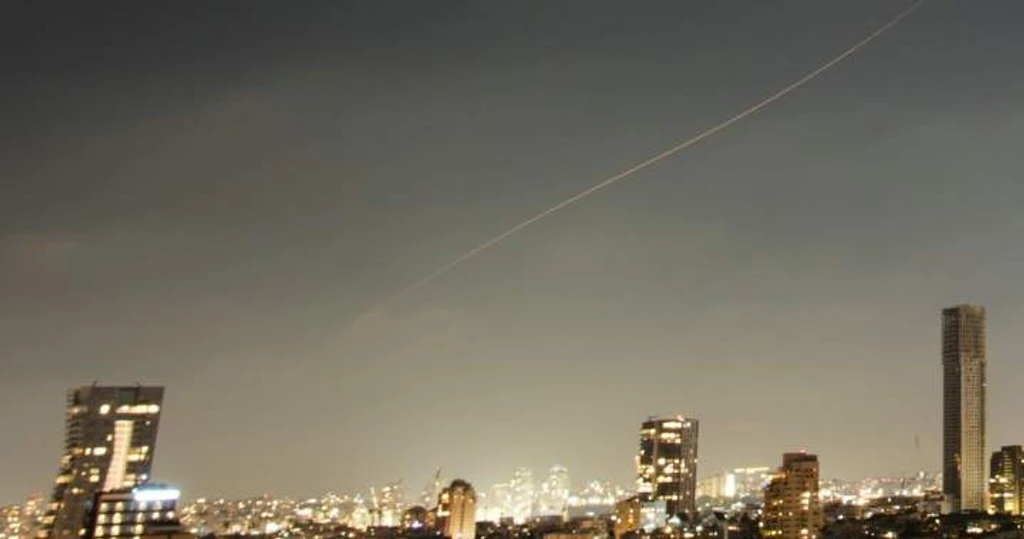
Iran launched missiles at Israel in the first such bombardment since a fragile ceasefire took effect in early April, raising the possibility of a return to heavy fighting and complicating mediation efforts to end the war.
Iran’s state broadcaster confirmed the launches, and Tehran closed its western airspace to brace for a possible response. The attack followed Israel striking Beirut’s southern suburbs without warning earlier Sunday, defying Washington’s request to stand down. Israel said the Iranian-backed Hezbollah fired at northern Israel earlier in the day.
“Should these acts of aggression be repeated, the responses will be broader in scope and will encompass all American and Zionist targets throughout the region,” Iran’s Revolutionary Guard said in a statement.
Sirens sounded in several areas of Israel, sending millions running for shelter. Israel’s military said it intercepted the missiles, and multiple explosions were heard in the north. Less than an hour later, the military said people could leave areas reinforced against missile attacks.
“Iran has made a grave mistake,” Israel military spokesperson Brig. Gen. Effie Defrin said. The military’s chief of staff, Lt. Gen. Eyal Zamir, said it will “strike the enemy with determination as soon as the order is given.”
But Israel’s public broadcaster, Kan, said U.S. President Donald Trump told it that he doesn’t think Israel needs to respond further.
Iran had warned that an attack on Beirut would renew full-scale war across the Mideast, even as Pakistan and other mediators try to restart talks between Tehran and Washington.
“U.S. forces across the Middle East remain vigilant and ready,” the U.S. Central Command posted on X shortly before the missile launches.
Trump told a Fox News Channel reporter that he wanted the Iranians to stop firing missiles and return to the negotiating table. He also said that Israel’s strikes earlier Sunday were not coordinated with the U.S. and “I’m not happy about it.”