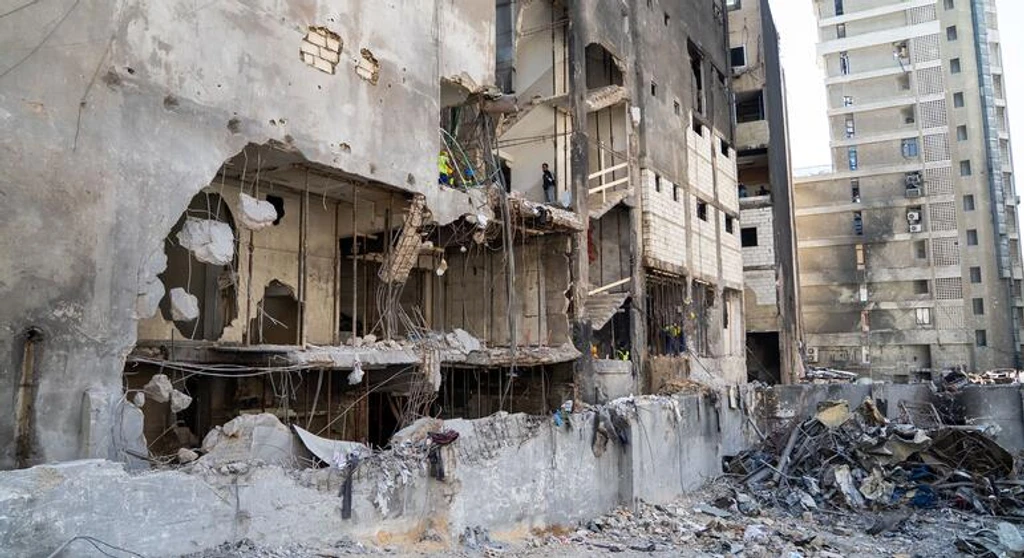
Thousands of people fled the southern suburbs of the Lebanese capital Beirut on Monday after Israel announced it will carry out renewed strikes targeting Hezbollah militants there.
Families are leaving by car, motorcycle, and on foot, carrying only essentials, according to the UN refugee agency. Many are returning to shelters as fear and uncertainty mount.
The development comes as the UN Security Council prepares to meet Monday afternoon to discuss the escalating conflict.
UN Special Coordinator for Lebanon Jeanine-Hennis Plasschaert noted that southern Lebanon was "in flames" while Beirut's roads were "choked with people fleeing their homes."
She warned that suffering is compounding "as both sides hold out for victory."
The crisis in Lebanon erupted on 2 March, just days after the US and Israel began bombing Iran, prompting Hezbollah militants in Lebanon to fire on Israel.
A US-brokered ceasefire between Lebanon and Israel took effect on 17 April but was never fully observed by either side. It was nominally extended twice, most recently on 16 May.
Nearly three months into the conflict, Lebanon faces a deepening humanitarian emergency with a critical combination of displacement and increased food insecurity.
More than a million civilians have been uprooted. Food security experts report that 1.24 million people nationwide-nearly a quarter of the population-are not getting enough to eat.
The World Food Programme has ramped up its response, reaching more than 700,000 people to date with hot meals, ready-to-eat rations, and food parcels for families sheltering in displacement sites.
WFP is seeking $112 million to sustain lifesaving assistance through August.