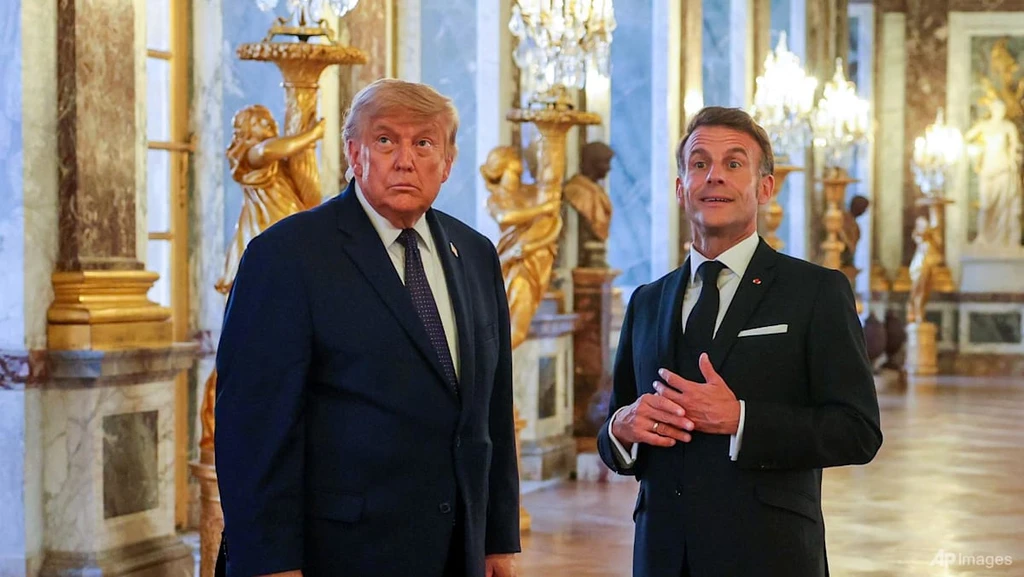
French President Emmanuel Macron opened the Palace of Versailles to U.S. President Donald Trump on June 17 for a private reception marking America’s 250th anniversary. The high-profile event served as a strategic diplomatic maneuver to sustain personal communication channels despite significant policy disagreements regarding Iran, Ukraine, and trade tariffs.
The grandeur successfully altered the presidential schedule. Trump confirmed he had planned to depart the preceding G7 summit early but remained specifically for the Versailles engagement. During a dinner featuring lobster and caviar, the leaders signed a memorandum concerning the conflict in Iran, leveraging the venue's historical weight to underscore the agreement's significance.
Macron explicitly views Versailles as an instrument of influence comparable to home-field advantage in sports. With France lacking direct economic or military leverage over Washington, cultural pageantry remains a primary diplomatic tool. Experts note this strategy targets Trump’s specific appreciation for architecture and status, as the former real estate developer has previously modeled Mar-a-Lago’s ballroom after the Hall of Mirrors.
The setting provides psychological resonance through its 357 mirrors and gilded galleries, originally designed to amplify royal authority. This aesthetic aligns with Trump’s second-term focus on monumental legacy projects, including plans for a new White House ballroom and a triumphal arch. The environment offers a familiar yet elevated stage that validates his preference for ceremonial scale.
Despite the successful optics, tangible policy concessions remain elusive. The relationship has shifted from early camaraderie to transactional friction, evidenced by threatened 100 percent tariffs on French wine and Champagne. Domestic critics argue the spectacle distracts from substantive strategic autonomy, while historical precedents suggest such pomp rarely resolves deep-seated geopolitical rifts.
Ultimately, the Versailles summit secured continued dialogue rather than immediate resolution. While the pageantry flattered the visiting president and prevented a premature G7 exit, fundamental disagreements on trade and security persist beneath the gilded surface.