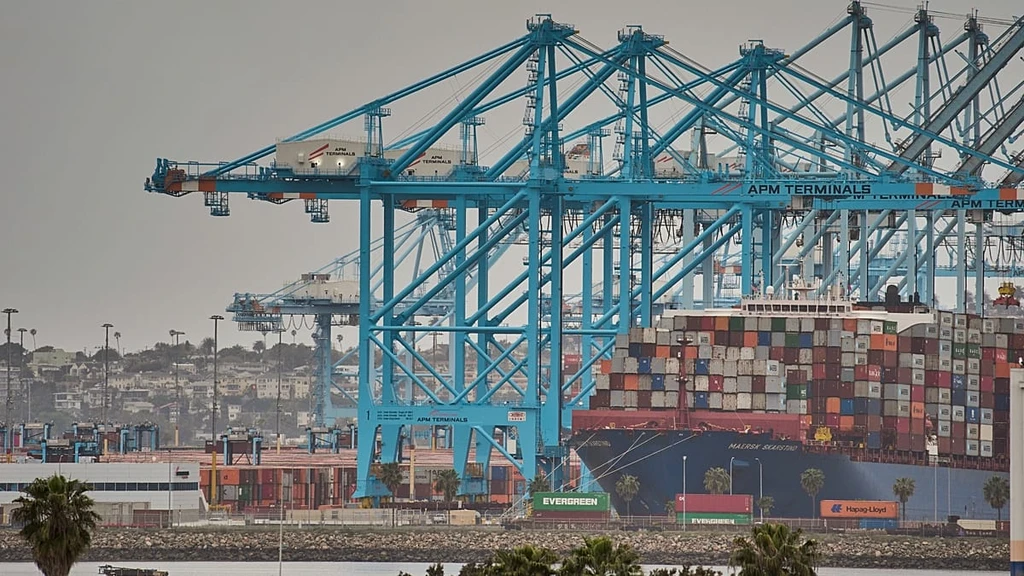
Danish shipping giant Maersk reported a sharp 12-fold drop in first-quarter net profit to $100 million, down from $1.2 billion a year earlier, as weaker freight rates in its Ocean division weighed heavily on earnings.
Revenue slipped 2.6% to just under $13 billion. Earnings per share crashed to $4 from $74 in the same quarter last year, highlighting the volatility in global container shipping.
Despite a 9.3% rise in volumes across its business, the company said excess shipping capacity and the ongoing conflict in the Middle East created significant headwinds.
The company warned traffic through the Strait of Hormuz remains at a near standstill, though the conflict-which began on February 28-had only a limited direct impact on first-quarter results.
Maersk kept its full-year guidance unchanged, projecting global container demand growth of 2% to 4% in 2026.
CEO Vincent Clerc said demand remained resilient across most regions, but cautioned that volatility in ocean freight is high, with oversupply from new vessel deliveries continuing to pressure rates.
Shares fell 4% on Nasdaq Copenhagen.
Industry Under Pressure
Hundreds of vessels remain stranded in the Persian Gulf, carrying crude oil, refined products, and fertilizer. Over 1,550 vessels with roughly 22,500 mariners are inside the region, per US military estimates.
German shipping rival Hapag-Lloyd said disruption around Hormuz is costing it about $60 million a week, driven by higher fuel and insurance bills.
Analysts warn that even if the Strait reopens soon, markets are unlikely to return quickly to normal. Kaho Yu of Verisk Maplecroft said refiners, shippers, and commodity traders will remain cautious until the threat of renewed disruption has clearly passed.