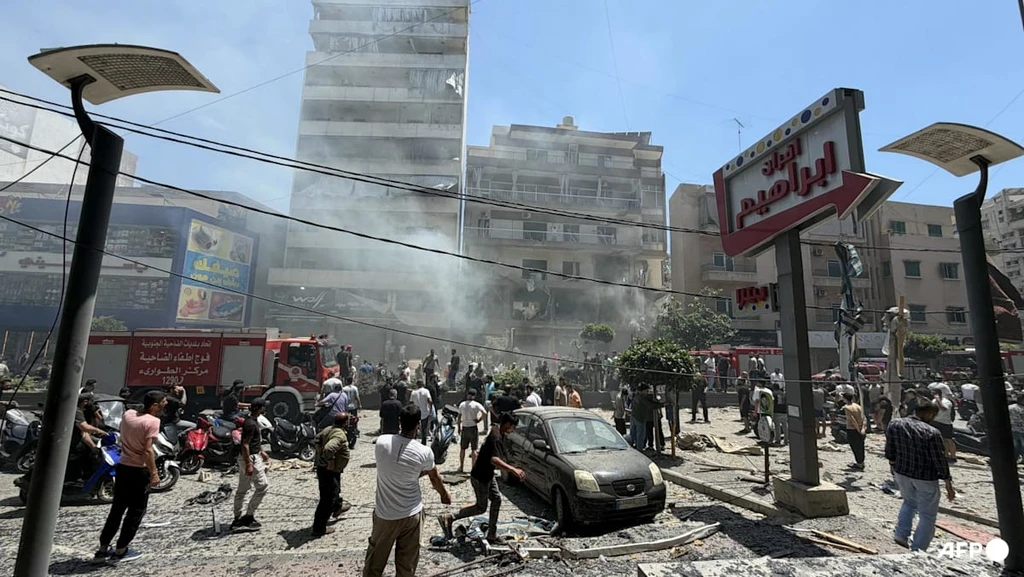
The interim ceasefire reportedly agreed upon between the United States and Iran remains fragile. Former Israeli Foreign Minister Shlomo Ben-Ami warns the deal is unattainable if Israel persists in its military campaign against Hezbollah in Lebanon.
The current agreement reportedly secures only the reopening of the Strait of Hormuz and plans for renewed nuclear negotiations. These objectives reflect President Donald Trump’s urgency to exit a conflict that has damaged his approval ratings. However, these gains are contingent on halting hostilities in Lebanon, a condition Tehran considers non-negotiable.
Significant friction exists between Washington and Tel Aviv. While the Trump administration prioritizes preventing Iranian nuclear weapons, Israel views eliminating ballistic missile threats and proxy militias as existential necessities. Israel recently launched airstrikes on Beirut even as US and Iranian diplomats finalized terms, directly challenging American diplomatic efforts.
Iran has explicitly stated that ending Israeli aggression in Lebanon is a prerequisite for any final agreement. Continued attacks will trigger retaliation, undermining the ceasefire. This dynamic places President Trump at odds with Prime Minister Benjamin Netanyahu, whose security objectives diverge sharply from American political interests.
The alliance has deteriorated into open hostility. Reports indicate President Trump has verbally berated the Israeli Prime Minister, demanding compliance with an agreement that may not fully address Israeli security concerns. Vice President JD Vance acknowledged this divergence, noting that while interests overlap, America's primary objective remains strictly nuclear containment.
Strategically, Iran appears to have leveraged the conflict to strengthen its regional position. The new framework effectively positions the United States as a guarantor of stability in Lebanon, indirectly protecting Iranian proxies. This outcome represents a complex geopolitical shift where American diplomatic goals now intersect with, and potentially constrain, Israeli military strategy.