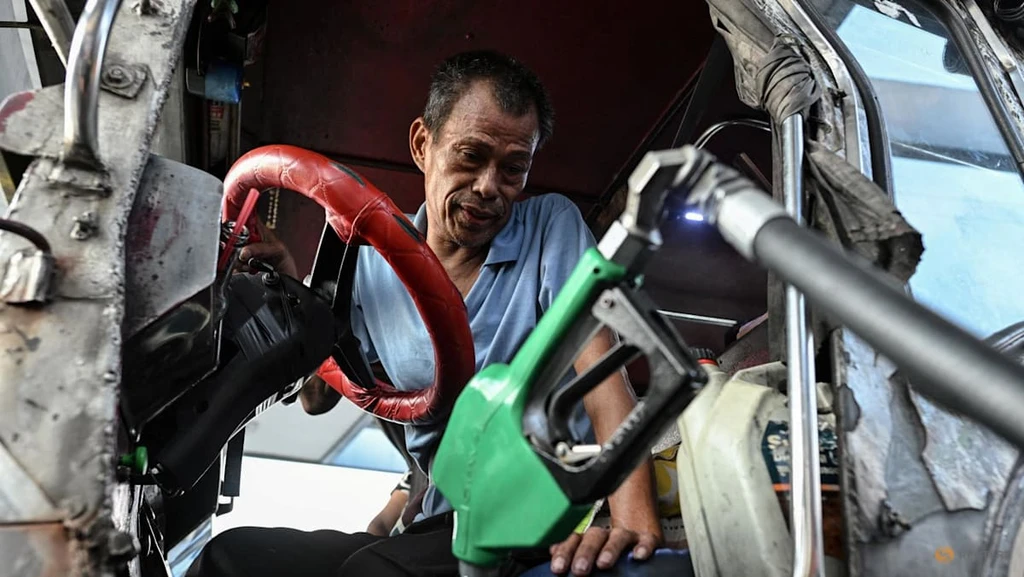
President Ferdinand Marcos announced the Philippines will move to a four-day work week starting Monday across all government offices. This measure aims to alleviate the economic strain caused by escalating fuel prices, directly linked to the ongoing conflict involving Iran, Israel, and the United States.
Marcos warned that disruptions in the Strait of Hormuz, a critical oil transit route, could lead to significant price hikes for gasoline, diesel, and kerosene. "We are victims of a war that is not of our choosing," he stated, emphasizing the government's commitment to protecting its citizens.
The Philippines, heavily reliant on Middle Eastern crude oil and oil-fired power plants, faces challenges extending to its diaspora. Over two million Filipinos working in the Middle East are also concerned about their safety and job security.
To counter these pressures, government agencies are mandated to reduce fuel and power consumption by 10-20 percent. Non-essential activities like study tours and online-feasible meetings are also being curtailed.
President Marcos has requested Congress to consider reducing petroleum excise taxes and amending biofuel laws to allow for cheaper blending options. Further support includes fuel subsidies and cash transfers for affected sectors.
The four-day work week is designated as a temporary measure, with no specified end date. Frontline services, including police and fire departments, are exempt.