Iran conducted annual military drills with Russia as a U.S. aircraft carrier approached the Middle East. President Donald Trump expressed hope for a deal on Tehran's nuclear program, but talks remain deadlocked. Iran refuses to discuss scaling back its missile program or severing ties with armed groups.

Recent indirect talks yielded little progress, raising concerns that either side might be preparing for conflict. Iran, though weakened by past strikes and protests, retains the capability to strike regional U.S. bases and Israel. Iranian drills recently included live-fire exercises in the Strait of Hormuz, a critical oil chokepoint.
The presence of the USS Gerald R. Ford carrier bolsters the U.S.'s ability to project power. Trump has previously refrained from striking Iran, setting red lines over civilian casualties and mass executions while seeking renewed nuclear talks.

An unnamed senior U.S. official reported that Iran has agreed to provide a written proposal addressing U.S. concerns from recent talks. Top national security officials discussed Iran, with military readiness expected by mid-March.
"It's proven to be, over the years, not easy to make a meaningful deal with Iran, and we have to make a meaningful deal. Otherwise bad things happen," Trump stated.
Concerns prompted Poland's Prime Minister Donald Tusk to urge citizens to leave Iran immediately due to potential evacuation difficulties. The German military also relocated non-essential personnel from Iraq.
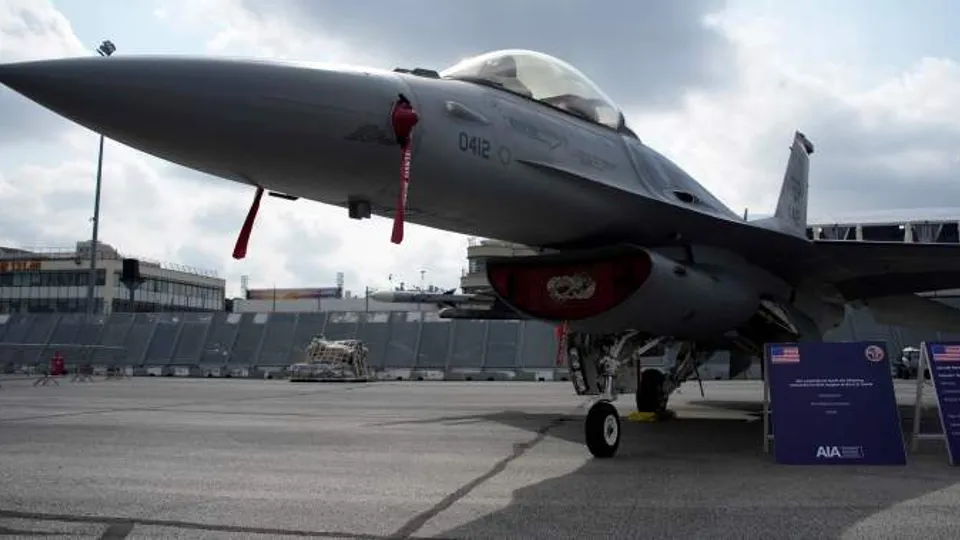
The U.S. has deployed additional combat aircraft to the region, reinforcing Trump's threat of a major air and missile campaign if talks fail.

Iranian and Russian forces conducted joint drills in the Gulf of Oman and Indian Ocean to enhance coordination. Footage showed Iranian naval special forces boarding a vessel.
Meanwhile, the USS Ford was positioned to potentially support Israel and Jordan in case of conflict. Israel, anticipating potential Iranian missile strikes, stated it is prepared for any scenario, with Prime Minister Benjamin Netanyahu emphasizing a severe response to any Iranian attack.
Israel advocates for a deal that not only halts Iran's nuclear program but also curbs its missile capabilities and ties to militant groups. Iran insists talks focus solely on its nuclear program, claiming it ceased uranium enrichment after previous U.S. and Israeli strikes. The U.S. and allies suspect Iran's program aims for weapons development, while Israel is widely believed to possess nuclear arms.