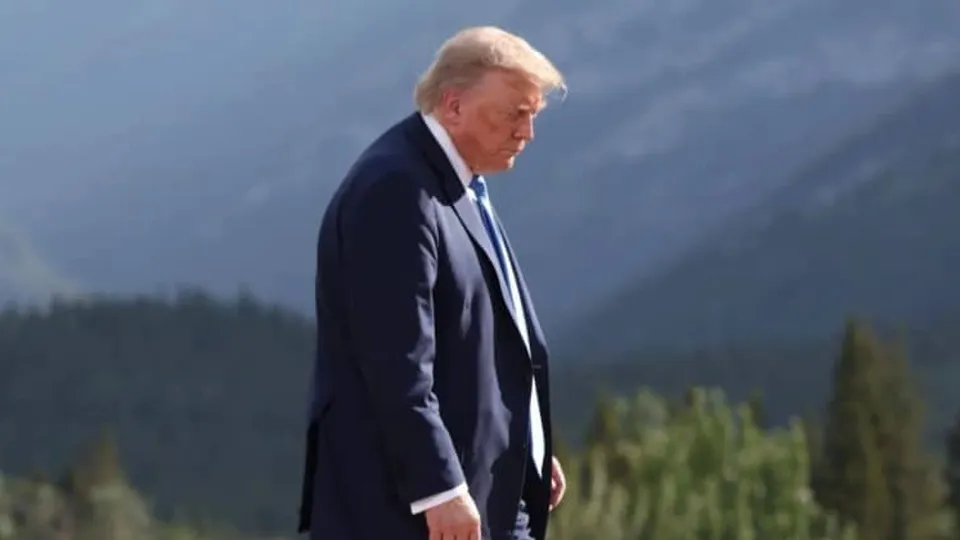
The Supreme Court has delivered a significant legal defeat to former President Donald Trump, ruling 6-3 that his administration overstepped executive authority by imposing certain tariffs. The decision nullifies reciprocal tariffs previously levied on countries like China, and a 25% tariff on specific goods from Canada, China, and Mexico, which were partly justified as a response to fentanyl.
At the heart of the ruling is the International Emergency Economic Powers Act (IEEPA). Justices determined that the 1977 law does not grant the president the power to set tariffs on imported goods, a authority historically reserved for Congress under the Constitution's commerce clause. The administration's argument that IEEPA's provisions for regulating imports included tariff-setting powers was rejected by the majority.
Trump had declared a national emergency in April 2025, citing trade deficits and seeking to implement a baseline 10% duty on all imports, alongside steeper rates for select trading partners. While the ruling leaves some tariffs in place, it overturns Trump’s country-specific "reciprocal" tariffs and the 25% duty on select imports previously linked to fentanyl concerns.