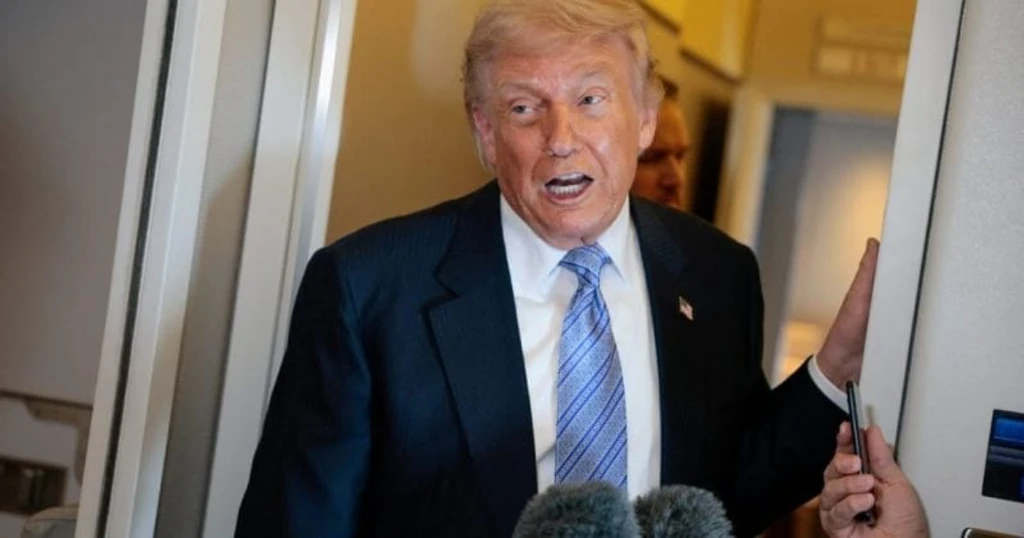
Donald Trump announced that the United States had prepared a military strike against Iran but stood down after direct appeals from leaders of Gulf nations, including the Emir of Qatar, the Crown Prince of Saudi Arabia, and the President of the UAE.
Trump framed the decision as a temporary diplomatic pause. The strike had been scheduled for as soon as 'tomorrow' but he allowed additional time for negotiations. American military forces remain on high alert, he said, and ready for a large-scale assault if diplomacy collapses.
The core issue is Iran's nuclear program. Trump emphasized that preventing Iran from acquiring nuclear weapons remains non-negotiable, and the military option remains on the table. The Gulf states, which bear the most immediate consequences of a regional conflict, convinced him a window for negotiation still exists.
The Strait of Hormuz, a narrow waterway between Iran and the Arabian Peninsula, is a critical chokepoint for global energy markets. Roughly a fifth of the world's petroleum passes through it daily.
Geopolitical stability acts as a background radiation for global markets, including crypto. When tensions spike, correlations between assets converge, and everything sells off. Russia's invasion of Ukraine triggered a broad selloff across crypto and equities. When tensions de-escalate, risk appetite recovers.
The immediate takeaway: a hot war between the US and Iran is not happening this week. But the underlying conditions that brought the US to the brink, Iran's nuclear ambitions and Trump's willingness to use force, haven't changed.
The variables to watch: whether Iran agrees to meaningful concessions, whether Trump signals renewed military intent if talks stall, and any disruption to shipping in the Strait of Hormuz.