The United States and Azerbaijan are commencing significant infrastructure projects following a new strategic partnership, the US-Azerbaijan Charter on Strategic Partnership. Talks in Baku focused on the Trump Route for International Peace and Prosperity (TRIPP) corridor, aimed at enhancing regional connectivity.
The US Trade and Development Agency (USTDA) is exploring projects in liquefied natural gas, civil nuclear energy, electricity transmission, AI infrastructure, cybersecurity, and digital connectivity. These initiatives aim to bolster Azerbaijan's energy security while serving US economic and strategic interests.
Azerbaijan's central role in the TRIPP corridor, a rail and road link brokered as part of a peace declaration between Armenia and Azerbaijan, positions it as a vital hub connecting Central Asia to the West. This corridor is a key component of the wider Middle Corridor, facilitating trade between China, Central Asia, and Europe.
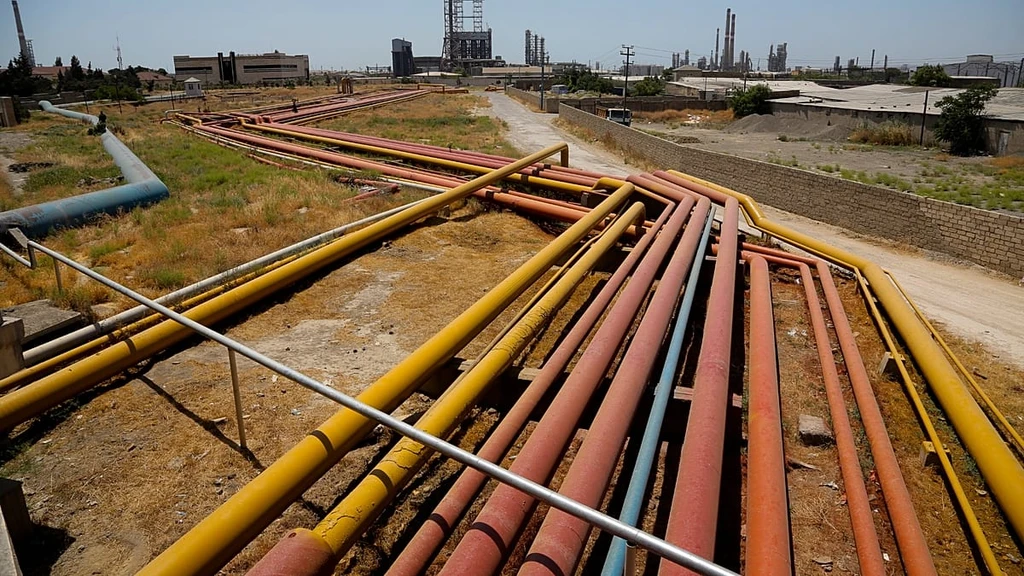
This push aligns with Azerbaijan's established role in European energy security through pipelines like the Baku-Tbilisi-Ceyhan (BTC) and the Southern Gas Corridor (SGC). These routes bypass traditional supply channels, delivering Caspian energy resources directly to Europe. With the EU's high gas import dependency, the SGC has become critical for supply security, with gas reaching Europe via the Trans Adriatic Pipeline (TAP) since 2020.
Furthermore, the EU and Azerbaijan are developing green energy corridors to facilitate renewable electricity trade across the Caspian-Black Sea-Europe route and other links. This initiative supports Europe's energy diversification and sustainability goals.
EU foreign policy chief Kaja Kallas emphasized Azerbaijan's importance as an energy and connectivity partner, noting the EU's intent to deepen ties and resume negotiations for a new bilateral cooperation agreement. The EU also stressed its strategic interest in a stable South Caucasus and the significance of the Armenia-Azerbaijan normalization process for regional opportunities.